

The Quiet Thread
Issue No.12 – The Night That Never Gets Dark
Stories from our home at 682.5 metres above sea level
June has arrived. The light is long and extraordinary, and we are in what Scandinavians call pre-summer — those luminous weeks between spring and the solstice when everything is fresh and nothing has peaked yet. The strawberries are here. And midsommar is approaching.
Midsommar celebrates the summer solstice — the longest day of the year, when the sun reaches its highest point and the night barely comes at all. It falls on a different date each year, somewhere between the 20th and the 24th of June. In Norway and Denmark, it is celebrated on whichever day the solstice actually falls. A bonfire is lit. Good company is gathered. The long light is enjoyed. Norwegians do not require ancient mythology to justify sitting outside around a fire. They simply find it koselig — you may know the word hygge, that Norwegian and Danish word for warmth, togetherness, and the particular pleasure of being exactly where you are. The Norwegians, apparently, felt hygge was not quite enough. So they created koselig. Same idea, a hundred thousand times deeper. Any occasion will do. But if there is a fire to sit in front of — a fireplace, a bonfire, a flame of any kind — that is koselig in its truest form.
When it comes to midsommar, however, Sweden took it up a few notches.
In Sweden, midsommar is the celebration of the year. Bigger than Christmas. More theatrical than anything else on the calendar. And Sweden, being practical, moved it to the nearest Friday so that people could have the weekend off. Nobody questioned this. The solstice is an ancient astronomical event that has been marked by human beings for thousands of years. Sweden looked at it and said: actually, Friday works better for us.
To understand quite how seriously Sweden takes midsommar: last Saturday, the king and queen of Sweden celebrated their 50th wedding anniversary. They were married on the 19th of June 1976. They could not celebrate it on that date — midsommar weekend was in the way. The anniversary was marked a full week early instead — privately, but celebrated nonetheless. Even the Swedish monarchy works around midsommar.
There is a maypole (shaped as a cross), decorated with flowers and greenery. There are flower wreaths worn in the hair. There are schnapps songs, sung before each glass with complete sincerity. You are expected to know the words. And then, at a certain point in the evening, there is a song. About frogs. But we will come to that.
There is also an old Swedish tradition for midsommar night: a young woman should pick seven different wildflowers and place them under her pillow. She will then dream of the man she is to marry. What happens if you are already married is not entirely clear. Presumably you dream of your husband, which is either very romantic or very predictable depending on the marriage. Which seven flowers, precisely, is a matter of some debate. Nobody agrees on the specific varieties. Nobody knows what happens if you pick the wrong ones. The tradition offers no guidance. It simply tells you to pick the flowers, go to sleep, and see what the night brings.
There are worse instructions for midsommar.
The First Midsommar at 682.5 Metres
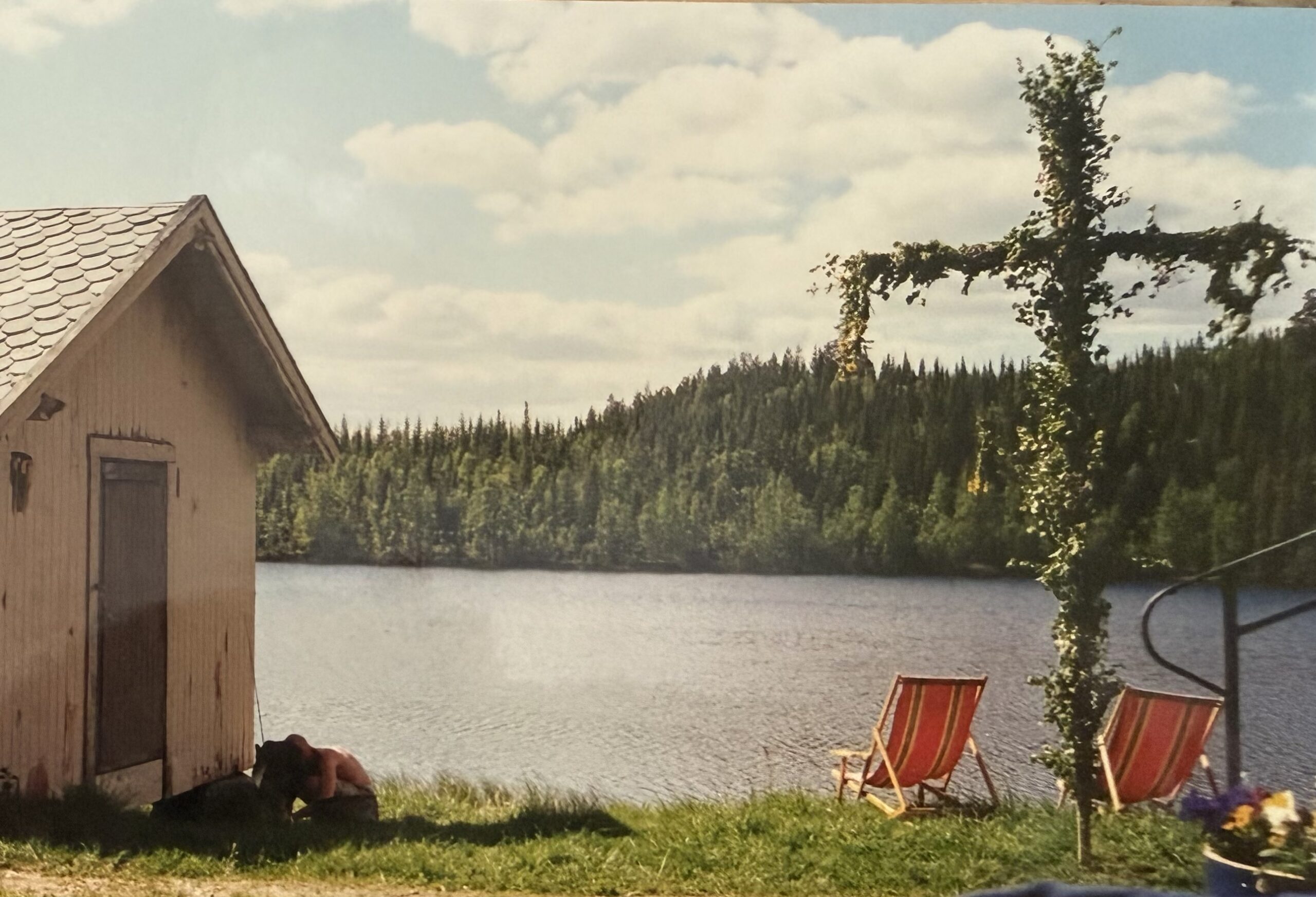
I am half Swedish. My father is Swedish, and though my mother was Spanish by birth, she had — through years of marriage and considerable personal conviction — become thoroughly Swedish in her habits. When our family lived in Venezuela, my father was away working abroad, and my mother took it upon herself to organise midsommar for the Scandinavian community there. She put up a maypole, made the flower wreaths, prepared the food. The non-Scandinavian friends who were invited saw it as a curiosity and a reason to party — which is, when you think about it, the main purpose of midsommar in Sweden.
The neighbours who were not invited looked over the fence and reached the only logical conclusion available to them. My father was away. There was a decorated pole in the garden. Someone must have died. It took some explaining.
When Arne and I moved to our railway station in Valdres in the early 2000s, it seemed entirely natural to mark the solstice properly. That first summer we invited friends — a Swedish-Norwegian couple and a French friend who had no strong opinions about the solstice. The Swedish friend made flower wreaths. We put up a midsommarstång. We placed seven wildflowers under our pillows that night. We had already found the one we would marry, but tradition is tradition.
This was a hybrid midsommar — Swedish and Norwegian in equal measure. Certain Swedish elements were present. Certain others — the herring — were quietly left out. I knew my audience. And in the Norwegian tradition, there would be a bonfire. In Sweden, midsommar is celebrated without one. Here, the bonfire is the point.
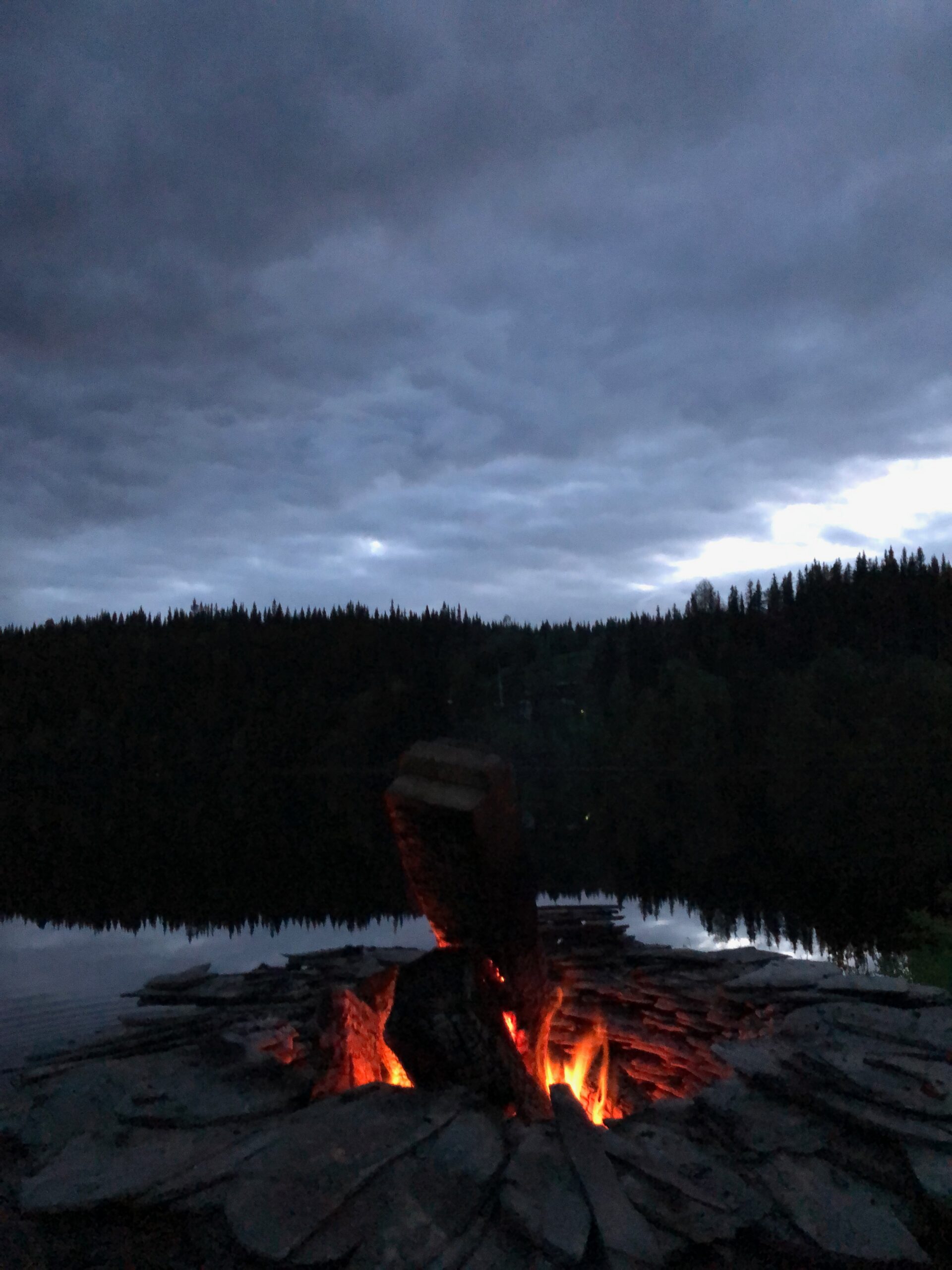
Arne had spent weeks planning and building a raft, with the idea of floating the bonfire out onto the lake. We would sit on the shore in the long midsommar light and watch the flames reflected in the water. It would be dramatic. It would be beautiful. It was an excellent plan.
It was also, as it turned out, less dramatic than anticipated. There was a great deal of wind that evening. The bonfire did not light. We abandoned the raft and went inside. The following morning we went out to the lake and found the raft still floating, perfectly intact. Arne had to get into a canoe and bring it in. What happened to the raft after that, neither of us can quite remember.
We still lit a fire that evening — on the shore, as close to the water as possible and as far from the house as we could manage. Which is still how we do it now.
2006. Henrik’s Wedding. The Real Thing.
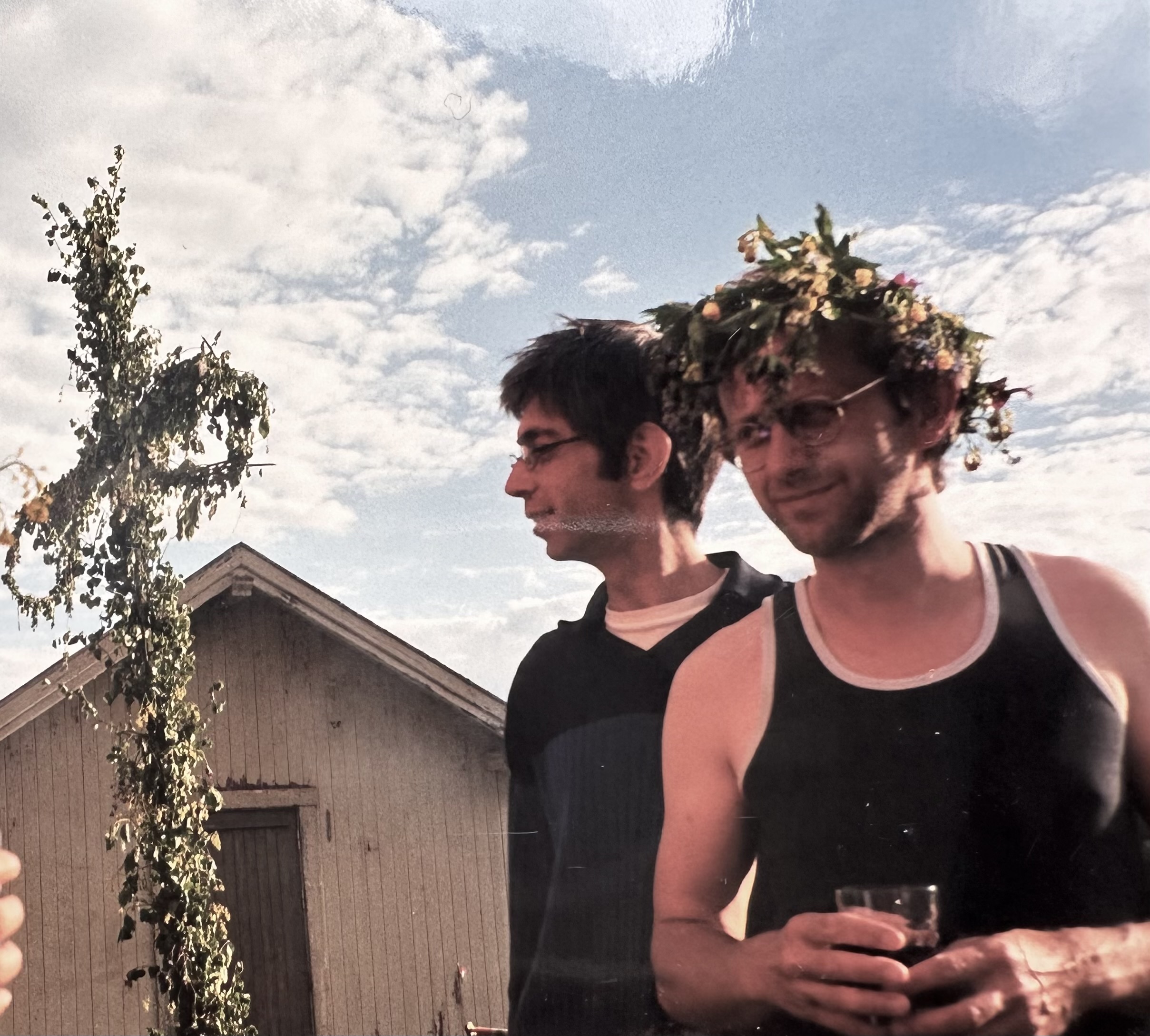
In 2006, our dear friend Henrik — a Swede, naturally — chose to get married on midsommar weekend. This is not unusual in Sweden. Midsommar is the biggest celebration of the year, and if there is going to be a party anyway, why not consolidate? People are practical about these things. And so Arne, who had until that point experienced only our gentle Valdres version — maypole, flower wreaths, one undrowned raft — found himself at a full Swedish midsommar for the first time. With a flower crown on his head.
I had prepared him as best I could. There would be a maypole, I said. Summer food. Schnapps songs. And a song — a very important one. Everyone sings it together and dances.
What kind of dance, he asked.
I told him it was best experienced in person.
The menu arrived first. Herring — several varieties of pickled herring, prepared in ways that Swedes consider festive and Arne considers a personal affront. New potatoes with sour cream and dill. Strawberries with cream. Arne understood the potatoes. He understood the strawberries immediately and completely — Scandinavian strawberries in June are among the finest things you can eat anywhere in the world. Sweet, juicy, sold at the roadside from early summer. They require no argument.
The herring was another matter. Arne ate a great deal of potatoes with sour cream. And then a great deal of strawberries.
Then the song began. It is a song about frogs. Small ones, who have no ears and no tail. And then they go quack quack quack. And everyone — adults, children, grandparents, wedding guests in their finest clothes — squats and hops around the maypole to demonstrate all of this. Arne stood for a moment and watched. A circle of Swedes, several schnapps in, doing the frog dance with complete sincerity. He looked at me. I nodded. He joined in.
He told me afterwards that it confirmed every opinion he had ever held about Swedes.
Present company excepted, obviously.
The schnapps songs came later. There are many of them, sung before each glass with complete sincerity by people who could not otherwise carry a tune. Arne did not know the words. By the third song he was doing his best.
On the drive home after the weekend, Arne was quiet for a while. He had had plenty of time to reflect on the food. Then he said: in Norway, on the 17th of May, they at least give you a hot dog. A hot dog is something everyone can eat. Those with celiac disease can have a gluten free bun. Those who don’t eat pork can have a turkey one. Those who don’t eat meat at all can have a vegan one. In Norway, he said, nobody goes hungry on a national day.
He was not wrong.
Midsommar at Home
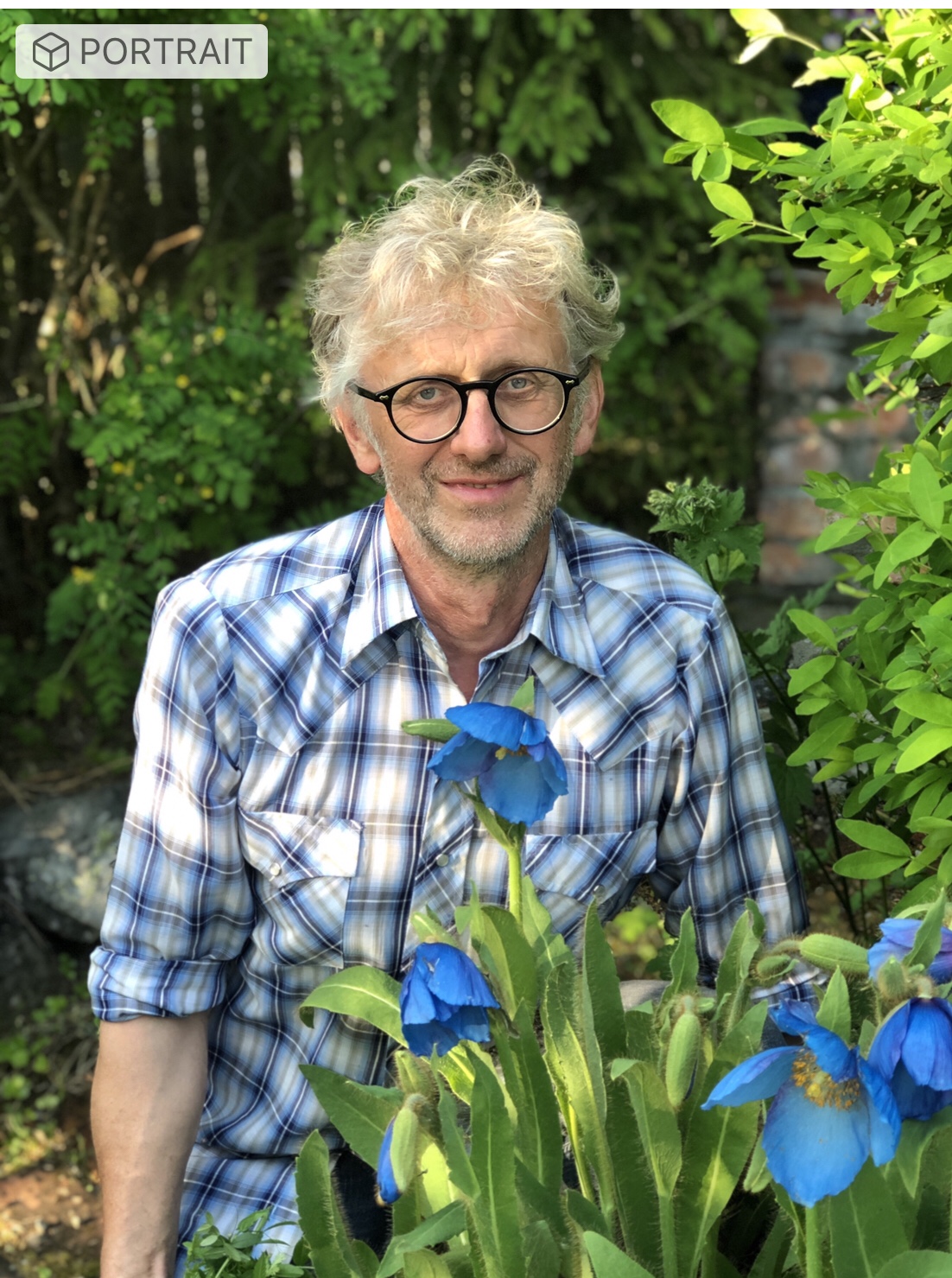
Here at 682.5 metres, midsommar coincides with something rather special. Arne’s birthday falls on the 22nd of June — the solstice, or close enough. On his birthday, the menu is always the same: spaghetti with scampi, which he says I make very well. It is not my favourite dish. I make it anyway. This is what birthdays are for.
For dessert, a pavlova covered in June strawberries. The meringue has had varying degrees of success. I am a good cook — I want to be clear about this. I am simply not a natural baker. The first time, I spread the meringue flat on the oven tray, fully expecting it to rise into something magnificent. It came out exactly as flat as it went in. I still remember the look on Arne’s face. I have since learned to heap it in the middle. The results are more reliable now.
The evening ends outside by the lake, with a bålpanne — a contained fire bowl, because we live in a wooden house and have learned to be sensible. The light never quite becomes dark. It is koselig in the deepest possible sense.
In previous years, Arne’s favourite flower bloomed reliably for his birthday — the Himalayan blue poppy, that extraordinary and improbable blue, here for a week and then gone. With warmer seasons, we get fewer now. Last year we were in Iceland and never saw how many came. This year, we will be here. We are hoping for a good showing.
This Year
The solstice falls on Sunday the 21st of June. This year we will be celebrating quietly at home — with my father, who is visiting. He is 90 years old, and we have decided he is under no obligation to do the frog dance. He has earned that exemption.
The following day, the 22nd, is Arne’s birthday. There will be scampi. There will be a pavlova. There will be strawberries. And there will be, we hope, at least a few Himalayan blue poppies by the lake.
It is shaping up to be a very good weekend.
From our railway station in Valdres, we wish you a beautiful midsommar — wherever the solstice finds you this year.
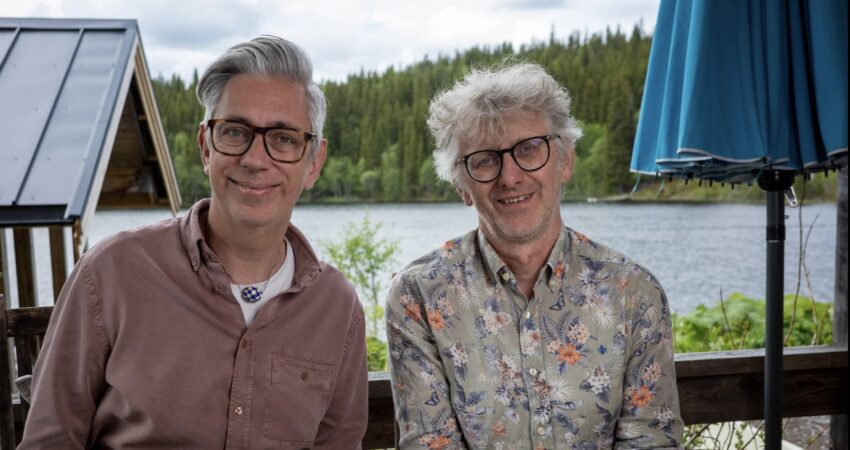
Arne & Carlos
Skip to comment form
I had tried several times before and, unfortunately, encountered people who took advantage of me, leaving me disappointed and discouraged. When I learned about Priest Alaska, I decided to contact him and share my situation. For the first time, I felt truly heard and treated with understanding. I decided to take a chance after receiving guidance from Priest Alaska; at the time, I never imagined how much my life would change. I longed for a major financial breakthrough, so I chose to remain hopeful and follow the advice I received. When I finally discovered that I had won $80 million in the lottery, I was completely stunned and overwhelmed with emotion. It was a moment I will never forget. The news brought immense happiness to my family and me, opening the door to opportunities I had previously only dreamed of. I am deeply grateful for the encouragement and guidance I received during that time. After enduring so many prior disappointments, I am simply happy to find myself in a much better situation today. Thank you, Priest Alaska, for the support and guidance you provided throughout this journey. If you are interested in receiving spiritual guidance regarding your hopes and goals, you can contact Priest Alaska to request his services. email: alaskaspellcaster44 @ gmail. com
I came across Priest Alaska and decided to seek his guidance. I shared my story openly and explained how much I wanted my wife and our marriage back. He listened patiently and made me feel understood when I was at one of the lowest points in my life. With time. After Priest Alaska did his work. I started noticing changes in my situation. The distance between my wife and me began to fade, communication became more frequent, and the coldness that had existed between us gradually started to disappear. Then came the moment I had been hoping for my wife came back to me and was willing to give our marriage another chance. Having my wife back in my life means more to me than I can put into words. We are now taking things one step at a time, rebuilding our connection and creating a better future again. My experience reminded me that when a relationship is going through a difficult season, it is important not to lose hope. Seeking guidance and spiritual support can help you find a positive way forward. If you would like to contact Father Alaska, here is his information. Email: alaskaspellcaster44 @ gmail. com
I read about Priest Alaska online that he has helped a lot of people revive broken marriages and relationships. I decided to reach out and from the beginning I felt welcomed and a little bit calmness struck me again my nerves was so calm immediately I knew I was on with the right person who can help me turn my marriage around for the better. Following the guidance of Priest Alaska I noticed positive changes, communication between me and my husband gradually improved, misunderstanding was resolved. Today, I’ve reconnected with my husband and we are committed to moving forward together. For anyone going through a difficult period in their marriage or relationship, seeking trusted guidance and support can be an important step toward healing and reconciliation. I would like you to learn about Priest Alaska Services visit his Email directly to alaskaspellcaster44 @ gmail. com
Such a lovely, warm and koselig story! Thanx for sharing. This year I was in Norway in June, traveling around in a small campervan. It was somehow disturbing that it never went dark at night and that even the blackbirds were singing way after midnight. Lovely country and lovely people. Best wishes from the Netherlands
Catching up on your wonderful blog. As a fourth generation Swedish immigrant , we never celebrated Midsommar in the states ! My family was quite dour and religious, with the opinion of anything fun must be sinful or at best indulgent. There is a minor branch of Norwegian heritage in the family that wasn’t spoken about , but I wonder if that is the part of me that appreciates the absurdity of it all! I must visit Sweden and experience what my family has been denying themselves all these years, and then head to Norway to get their perspective, and of course to buy yarn.
What a joyful read.
I achieved the longed for dream of spending Midsommer in Sweden last year, what a wonderful experience it was.
How wonderful to have your birthday every year, right on the cusp. Many happy returns c
What an absolutely gorgeous picture! Arne in blue and those Himalayan Poppies!!! Happy Birthday Arne!!! And Carlos, thank you for your wonderful writing.
Happiest of Birthdays, dear Arne! And a sincere thank-you to Carlos for your detailed description of midsommar at your home in Norway and elsewhere. This is the first episode of “The Quiet Thread” I have read, and I look forward to reading each and every one of them. As a former English teacher, I could not be more delighted reading personal writing from the soul. Reading and knitting—what else is better in life?
Happiest of birthdays Arne! As always Carlos some things in your blog made me laugh. Especially the flat pavlova. That would be something I would do. And Arne I’m with you about the Herring it’s not my favorite fish. My Dad uses Herring for bait to catch salmon. A much better use for herring in my opinion. Enjoy your birthday and summer.
As always,
Toni
Happy Birthday Arne!
Happy birthday Arne! And Carlos, once again your writing has filled me with wonder and a deep joy. Thank you for sharing. Your traditions are so different to mine here in Australia. 💗
Carlos, This is your first blog I have seen but have watched your videos for over 2 years.
You are a very good writer. I’m a retired journalist and librarian in the U.S. I especially enjoy your gardening segments. I probably
won’t sign up for your Patreon since I have
some trouble using it with Kate’s channel.
Thank you for the lovely read Carlos. I always enjoy reading the quiet thread. Happy Birthday Arne! I hope you get many Himalayan Blue Poppies!
Our family celebrates Midsummer in the states to honor our Swedish heritage, though a tamer, more Norwegian style version- classic dishes, flower crowns, and aqavit-but no frog songs. The sil is ceremonial present, but only few will taste it (except or friend with a Norwegian heritage loves it!)
Four years ago we travelled to Dalarna for midsummer. I’d go back for the strawberries alone! Glad midsummer!
Aw, what a lovely read ♡ and the pictures are very sweet. When I read about the frog song and your description of the dance something clicked and I went to search for it, and yes we sang that song in primary school, in Germany and in German. I so loved it, and still do.
Have a koselig time!
I must have been Swedish in a former life. I love the May pole idea, frog dancing and pavlova with strawberries. In the USA specifically SC where I live. No such celebrations I have ever heard of or seen. If there were I would go for sure. Love hearing of your celebrations for Midsommar. Enjoy and have a very blessed day with your Dad and friends. Happy Birthday Arnes. My 65th is 6/26/26 my grand daughter Phebe’s is on summer solstice this year she will turn 19. Always a pleasure reading your writings Carlos. Writing is not my strong point. I’m jelly that you are so able to be so eloquent.
Thank-you for sharing your slice of life. I love hearing about your lives and times across the pond.
Wishing you both a wonderful, fun, and happy Summer Solstice!!!! Happy Birthday to you Arne!!! I love reading and listening to the two of you and all of your wonderful stories. Carlos enjoy your father’s visit. Hope that he stays in the best of health and has a great visit with the two of you.
Midsummer celebration! A very special time of year.
Gratulerer med dagen, Arne. Matte du alltid ha latter, music, og skjonnheten til valmuene I Himalaya.
Happy Birthday Arne and I love your menu selections. As always, beautifully written. Hello to your dad.May he have a wonderful visit.
oops, my reaction came as anonymous.That wasn’t my intention
A wonderful story enlightening us about the Scandinavian traditions, with a personal tale written with love and respect for Arne and his reaction is as I imagine he would. It shows how you grew together in similar and at the same time subtle differences from your earliest experiences with in your communities. The word koselig as well as hygge reminds me of a similar word in our language ” gezellig” which means about the same; being together with family and friends or just with friends and celebrating life or just enjoy each other when you are home and who ever decides to visit you will be welcomed and given a drink and a meal depending on the situation at that moment. You can plan things spontaneously or just celebrate national or international holidays together with joy. Because the winter can be long and lonely when the weather doesn’t permit visiting in times when it should be easy, but circumstances make it harder to travel. Have a wonderful summer solstice and a fantastic birthday. I am sure you will make the most of both. Warm greetings from a very hot (29 degrees Celsius) Fryslân in the north of the Netherlands
Arne and Carlos, it is 5:20 in the morning and Carlos, your story is the first thing I read today. What a funny and informative tale. Happy Birthday Arne. I will be traveling to Lake Tahoe for my sister’s 80th birthday on the 25. And the plans for my husband’s 90th are coming together very well. look forward to seeing you soon.
Christie Bilikam
Thanks to your blog I am waiting at Gatwick Airport for our trip to Norway- the Hurtegruten from Bergen. I hope you get commission!!
Dear A and C,
First, wishing you the happiest of birthdays, Arne. I hope the Pavlova is high and the flowers deep blue. Carlos, you are an extraordinarily good writer. I laughed out loud several times. I agree with Olga that these writings should be compiled into a book.
Much love to you both.
Ruthe
p.s.I’m with Kim, Anita,Irene, Mark and Adam at the Jimmy Beans retreat. A Norway reunion!
Such fun traditions that the whole country gets involved in. We here in the southern hemisphere will be in the winter solstice ! Happy birthday Arne, enjoy your special day xxx
Beautifully written, Carlos. It was all quite touching, humorous, and expressed the traditions in such an entertaining way. Happy Birthday, Arne, and many more !
Your writing is absolutely lovely, Carlos! Thank you for sharing this beautiful tradition. And, happy happy birthday, Arne! I hope your celebration is magnificent! ❤️🎁🎂
Carlos, Your Quiet Thread vignettes along with selected photos should be compiled into a book. It would be a best seller for sure. Happy birthday Arne! Pavlova with strawberries sounds perfect.
I love your writing Carlos. Descriptive, intimate, warm. Thank you.
This was beautifully written and brought both smiles and a feeling of sadness because what you describe is so fleeting, like Arne’s flower. I’ll keep a good thought the flowers arrive as expected and also send early birthday greetings, Arne. Carlos, you are a very gifted writer. Best wishes always to you both.
My ethnic background has some Swedish and Norwegian percentages but I know very little about these two countries. I enjoy reading about how Swedes and Norwegians celebrate different holidays and I also enjoy watching your YouTube videos
Oh what a beautiful read! Arne, I wish you a wonderful birthday! I hope you both have a great summer and enjoyable visit with Carlos’ father. Thank you for sharing your lives with us!
Your picturesque description armchair transported me to your lovely back yard. Would love to celebrate any day hanging out with you both. Especially a happy birthday to Arne. This is Fathers Day weekend in the States. I wish your father a happy Father’s Day also
Arne, wishing you every joy and Blessing on your upcoming birthday.
Hope you both have a wonderful Midsommar celebration. Thank you Carlos, for whisking me away with your writing. I am so grateful to read each treasured Quiet Thread.
Hugs to you both from the B.C. Rockies in Canada.
I remember all the mid-summers we used to celebrate on my great-grandparents farm. They were a wonderful celebration, no frog dancing, but lutefisk (and hotdogs, thank goodness!) we had the cross maypole but the strawberries were not ripe yet. It was North Dakota after all. After my great-grandparents passed we celebrate at my grandparents in SE Minnesota. Still no ripe strawberries and no lutefisk! Not my favorite food. We did have baked potatoes with sour cream and chives and romagrite ( I have no idea how to spell romagrite) for dessert.
Happy Birthday, Arne! You share a birthday with my late Mother. Now I know someone else to celebrate on that day. Carlos, thank you for your wonderful explanation of your traditions. I always enjoy reading them.
Happy mid-summer and a very happy birthday to Arne.
Muy feliz cumpleaños Arne! 🥳
Hermosas palabras, Carlos, la descripción de todas las festividades, dan ganas de celebrar con ustedes. Muy lindo.
Espero este año, en compañía del papá de Carlos, sea una gran ocasión para festejar en familia.
Muchos cariños y felicidades a ambos.
Muy feliz cumpleaños Arne! 🥳
Hermosas palabras, Carlos, la descripción de todas las celebraciones, dan ganas de celebrar con ustedes. Muy lindo.
Espero este año, en compañía del papá de Carlos, sea una gran ocasión para celebrar en familia.
Muchos cariños y felicidades a ambos.
Happy Solstice and happy birthday!
Now I need to go to Sweden next year!!!
Your words are beautiful Carlos
🎂🧜♀️🚐
Your beautiful words have made my heart happy. Thank you. Happy Midsommer to you both. Happy Birthday, Arne.
What a lovely description of the festivities, how you celebrate, and natures beauty, along with how you tell sweet stories about Arne and your Dad. Happy burthday to Arne! You made me want to be there to celebrate – I love the scampi and want tobtry the pavlova!
Happy, happy birthday, Arne! It seems Norway and Sweden know how to celebrate Midsommar and so much more. We are coming up on the Fourth of July and lots goes on then. But, I think I’d take a Midsommar and frog dances over fireworks any day! Thanks for this lovely peek into your days and traditions.
So touching, and funny, and lovely! Thank you for this beautiful (and instructive) text and Happy Birthday Arne, I hope you will have a wonderful show of Blue Poppies! Can’t wait to see you both again next month! Isabelle
Happy celebrations to you both. My birthday is the 26th of June. I just ordered my cake. Not a Pavlova but perfectly luscious in every way. This year I will add wreaths and bunting and candles and I will think of you both as we celebrate this time of year. Huge Huggies from Wisconsin!
Thank you for this story and information. it sounds like a wonderful time.
Happy Birthday Arne! As usual, I enjoyed reading your delightful message.
Happy Birthday Arne! As usual, I enjoyed reading your delightful message.
That was so beautifully expressed, and such a charming festival with interesting stories that go with it! Makes me want to visit Norway/ Sweden at this time of year just to experience this… koselig.
Wishing you all a beautiful, happy Summer Solstice.
For the 22 nd ofJune, Happy Birthday dear Arne! Wishing you the beat in life.
Warm regards from India,
Eera
Happy birthday, Arne. My husband and I will be celebrating our 55th wedding anniversary on June 19th. We were married June 19. 1971. For us, our summer begins when the first lightening bugs or fireflys appear. Saw our first last night emerging from the ground. So let’s all celebrate the beginning of Summer.
Happy Birthday to Arne! Reading this allowed me to fully visualize the midsommar celebration In Sweden and the fun and beauty it embodies. Thank you for this refreshing read. Enjoy your father-in-law’s visit, the upcoming celebration and Arne’s birthday!
Happy birthday, Arne! And Happy Midsommar to everyone!
It’s marvelous that there is a frog dance as part of the celebration — I am especially fond of frogs.
Thank you for this lovely, gentle, humorous, evocative piece! I really loved it! 🙂 I had been in a teeny-tiny bit of a snit before reading it, and I found myself inhaling deeply, savoring the words, the lake, the blue poppy, and the thoughts of the frog dance, the pavlova (both flat and puffy), the whole thing! So perfect! 🙂 It brought delight and joy to my day and turned things around! 🙂
Carlos, you write so beautifully! With so much wit! Snaps does a lot. It loosens up the atmosphere. My grandfather knew many snaps songs, coming home tipsy from the bar at midsummer, he had to go to. As an Alderman of the city, he had his responsibilities, you know. Happy birthday, Arne. With that gorgeous poppy <3 May the visit of your father (-in-law) be a memorable one.
I need to take more time with this message. At a quick look I am delighted with the details about things I just knew as background to stories.
I will celebrate my 71st birthday on June 21st. I have always felt blessed to have this as date as my birthday, especially this year as we also recognize the wonderful fathers in our lives.
Thank you for this, love from Nova Scotia, Canada,
Brenda
A lovely thread 🙂
Very happy birthday to Arne.
May you enjoy many Himaylanian Blue Poppies 🙂
Enjoy your midsommar celebration and Arne’s birthday, along with your father’s visit. We live in NW Galicia (the NW autonomous community in Spain) and the summer solstice is celebrated on the night of June 23, called la noche de San Juan, the eve of a holiday called el dia de San Juan. We will have a bonfire (which you must jump over seven times for good luck!) and will prepare a bowl of seven wildflowers and herbs in water which we will put outside in the moonlight overnight and will wash our faces with the water in the morning of the 24th, to bring us good luck in the coming year!
Carlos, your essays never, ever disappoint! Thank you so much for all your insight. As a half Swede myself, I loved going to the Midsommar festival in Los Angeles (yes! They do have one)! But you have given me more information. Give my love to Arne and one of these days, I’ll be a guest again on your cruises or adventures.
Dorothy
Happy birthday Arne from Tasmania, hope the poppies flower!
You do make me laugh! And in a quiet waiting area at Outpatients, I saw a few smiles. Happy day Arne and may your birthday cook have a good outcome! Hugs WAH in Oz x
Hi Arne and Carlos
Loved this blog about your solstice celebrations!
Have a wonderful birthday Arne, will be thinking of you on the day.
Love
Christina
Adelaide
Very Happy Birthday from New Zealand. Enjoy your traditions and celebrations of the Solstice! Its winter here in New Zealand and darkness arrives about 6pm. We have a quiet celebration called ‘Matariki ‘ and is based on a Maori tradition
involving stars moving together.
No frogs or dancing, but often families share a BBQ meal of sausages, steak.!
We make great Pavlova’s and use Kiwifruit for decoration. Strawberry season is many months away for us down here in the Southern hemisphere!
Very Best wishes to you both! Cherie
Happiest of birthday wishes to you Arne! I hope you see many poppies blooming.
Thank you for the wonderful description of Midsommar celebrations, Carlos.
They sound amazing. Not too sure about the herring… I’d probably try some, but not all!