

 The Quiet Thread
Issue No.14 – The Garden, Part Two: The English Garden That Wasn’t
Stories from our home at 682.5 metres above sea level
Written by Carlos
We’re back with more stories from our garden — if you missed the first one, Ten Years of Rocks, you can catch up here.
We finished the rock garden in 2010. Ten years of carrying stone — an English garden, inspired entirely by books, magazines, and seed catalogues from England, built by two people who had been to London many times and never once set foot in the English countryside.
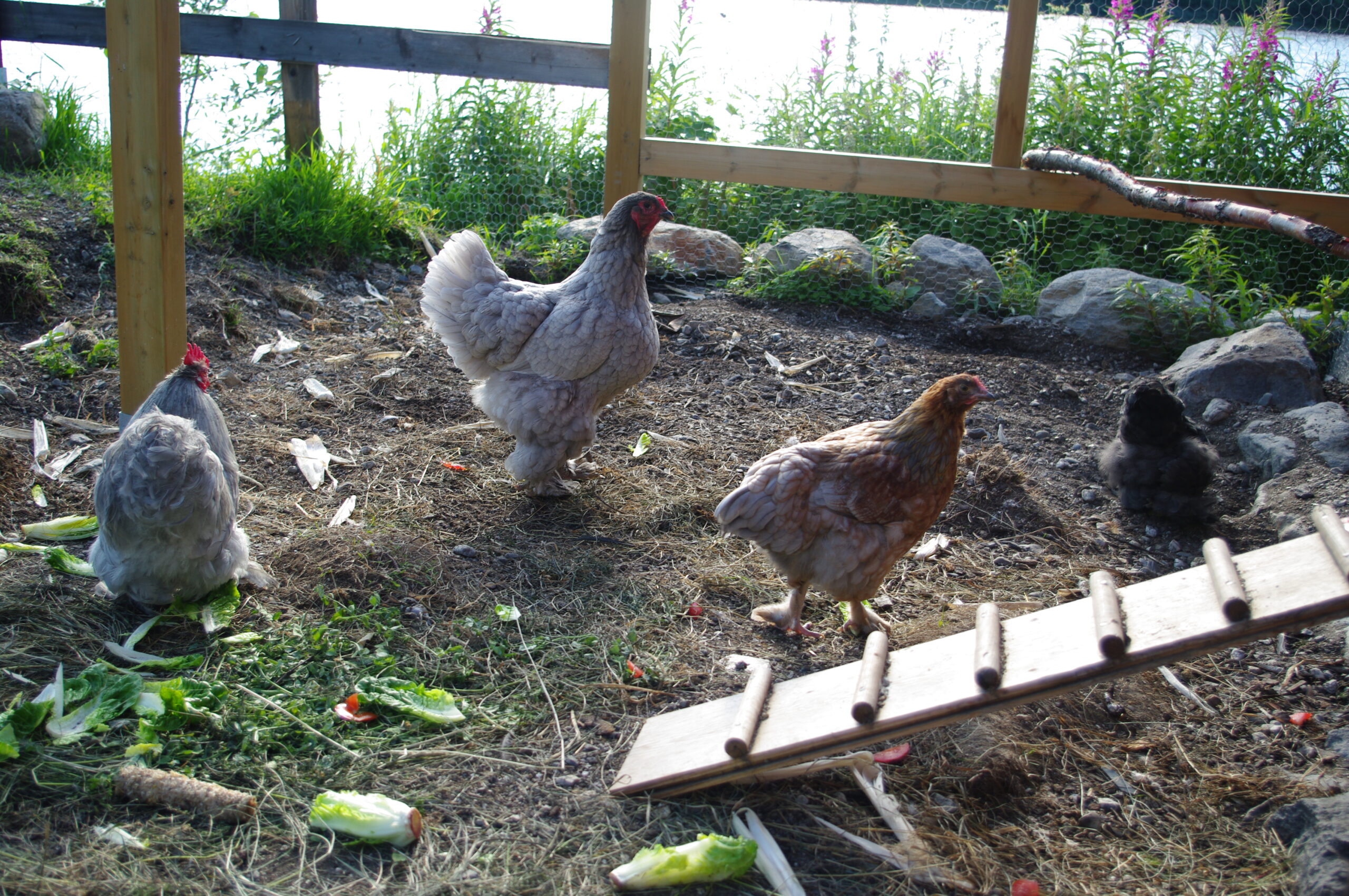
By then the whole picture was, we can now admit, faintly absurd. Two men, on top of a Norwegian mountain that had never asked for a garden, building one from scratch, modelled on a country neither of us had properly seen. During those days, we also had ornamental chickens wandering the paths — Sultan hens in their white turbans and feathered pantaloons, miniature and full-sized Chinese Cochins, a few Sussex, and some Silkies — while our books were doing well enough that journalists had started to come and interview us. We would show them around and declare, with total confidence, that ornamental chickens were the coming thing, and that everyone should have some. Delightfully eccentric, people had begun to call us. Looking at the chickens alone, it was hard to argue.
Two chicks were born that same spring, and we named them Katla and Eyja, after the Icelandic volcanoes — we’ll come back to that in a moment.
Our beloved chickens retired to our nephew’s care after about a year — travel got the better of us. He was delighted; egg sales, he pointed out, were pure profit once his parents covered the feed.
We were happy in the garden. We still missed England — missed seeing, with our own eyes, the gardens we had spent a decade quietly copying from books. That year, at last, we had the plane tickets to finally go.
Iceland had other ideas.
Eyjafjallajökull — a name we still cannot pronounce, and could not then either — erupted, and the ash grounded every plane in Europe.
We had carried rocks for ten years to build a garden inspired by a country we had never set foot in. The tickets were bought. The hotels were booked. And then, of all things — a volcano. On Iceland, a small island at the edge of Europe, sitting between two continents. Not a strike, not a war, not anything we had ever thought to prepare for.
We were not cancelling.
Ash could ground every plane in Europe, but it could not touch the railways. The trouble was working out how, exactly, one gets from Norway to England that way — there was no single place to search “Oslo to London by train.” We spent several days going country by country instead: the Norwegian railway, the Danish one, the German one, the Belgian one, and finally the English one, piecing together a route nobody had asked for in decades. The booking, in the end, took almost as long as the research — why book one train when you can book five?
Thirty hours in the end: Oslo to Copenhagen, Copenhagen to Cologne, Cologne to Brussels, Brussels to London. In London we changed stations for Tunbridge Wells — and then, somewhere around Sevenoaks, the train broke down, and we finished the last stretch by bus.
England, at Last
We arrived, eventually, and the gardens were everything we had spent ten years imagining they would be. Sissinghurst, Hidcote, Rousham — we walked through them in a kind of daze, taking photographs of things we already half-knew from books, seeing them properly for the first time.

It took a while, but we finally arrived at Sissinghurst.
We knew, even as we walked through them, that we could never grow what they grew. The soft, generous English palette — roses that bloom from May to October, borders that shift through the whole season — none of it survives at 682.5 metres. We had learned that once already, expensively, in our first years here, watching most of what we planted die.
But the plants were never really the point, we realised, standing in Sissinghurst. It was the tending — the same pleasure, whether the ground is Kent or a Norwegian hillside, of watching a thing you made keep growing. We came home with no illusions about ever having an English garden — certain, for the first time, that we already had something worth just as much.
Nothing in Nature is Straight
We came home from England full of ideas and inspiration, but it would take a few years before we could act on any of them.
The warehouse — the one that had belonged to the train station from the very beginning — was in trouble. Both it and the extension built onto it in the 1960s had foundations that were failing badly, but it was the extension itself that was truly derelict, condemned, and beyond saving. The historical part was sound, and the engineers were clear about what it would take to save it: tear the extension down, build a proper new foundation in its place, and move the old building thirteen metres back onto it. It was only once we understood that the whole space in front of the house would open up in the process that we saw what else it could give us — the thing we had wanted since England: a walled garden of our own.
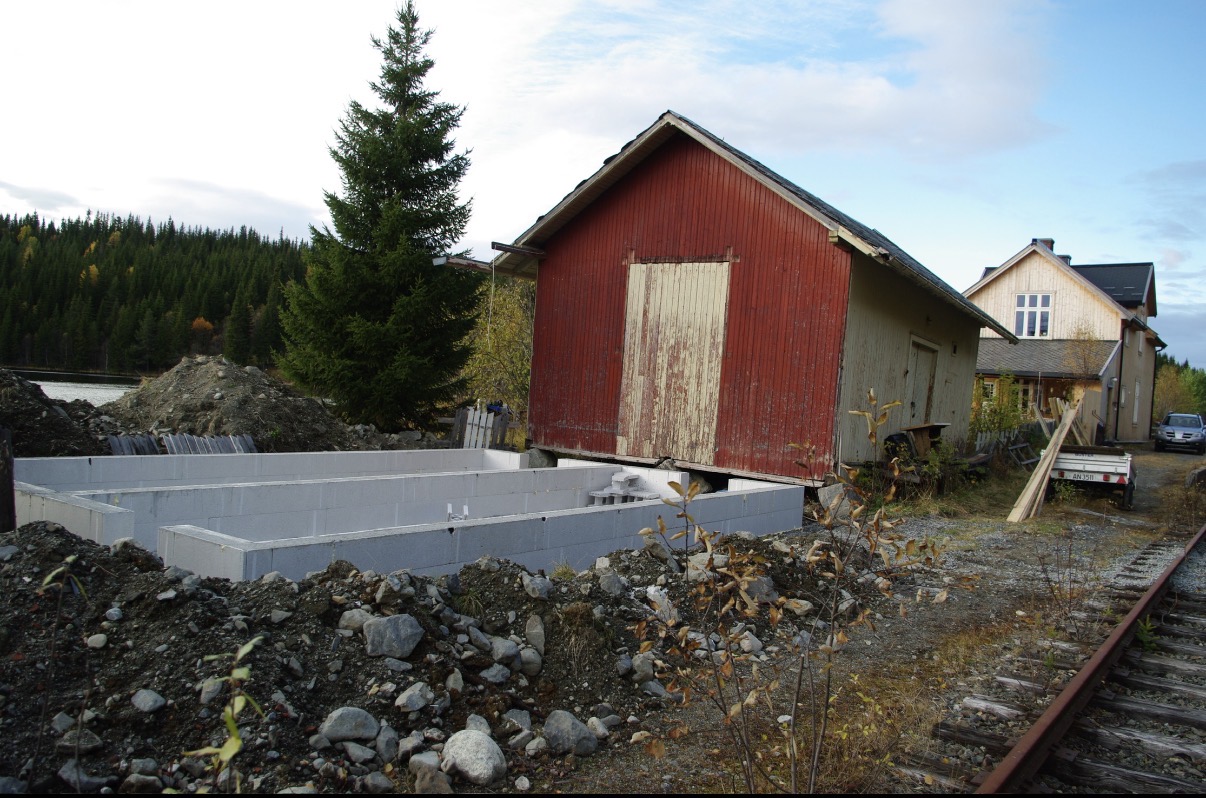
The warehouse, thirteen metres from home, waiting to be set down on its new foundation.
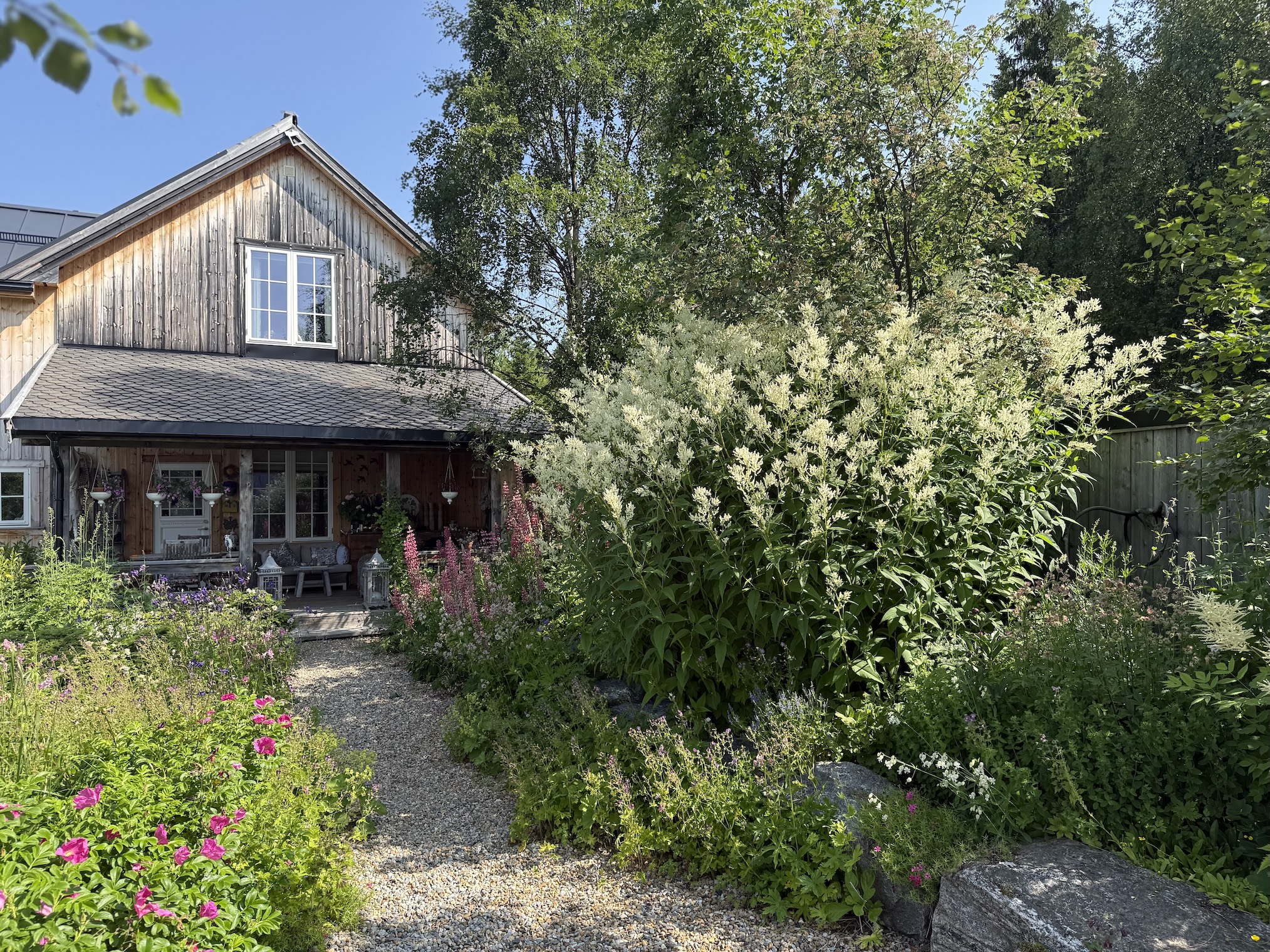
So when the builders came, that is what happened. The old foundation stones came up out of the ground as they lifted the building — large, scattered, haphazard, having shifted through a hundred years in the earth. While the builders still had the machine, I asked them to line the stones up in a row between the two houses. Arne and I built a wall of our own, running parallel to them, and filled the space between with earth: three sides of a walled garden, the fourth left open to the lake. It broke a rule I had spent ten years insisting on. Nothing in nature is straight, I used to tell Arne, every time we shaped another curve into the rock garden. And yet here it was: a bed running in a single straight line, the one deliberately straight thing on the entire property.
It has not stayed that way for long. Within a year or two, the geraniums and a few of the other perennials had already seeded themselves into the gravel path alongside it, softening the line until it barely reads as straight at all. Nature, it turns out, was never going to let a straight line stand for long — not even this one.
The wall is in there somewhere. These days you have to look for it.
The last piece was the grass. Between the two houses, we kept the gravel — but further along, toward the greenhouse, I wanted something softer. Arne did not want grass. He predicted fights about who would cut it and a noisy machine ruining the quiet we had spent years building. I won the argument anyway, and then solved the actual problem by buying a robot lawnmower. We are now on our second generation, which we call Gard, short for the brand Gardena, and also a traditional Norwegian man’s name. She has never once complained about whose turn it is.
The Garden Eventually Overruled
A garden this size, built over this many years, collects its own stories, and a few of them are worth telling on their own.
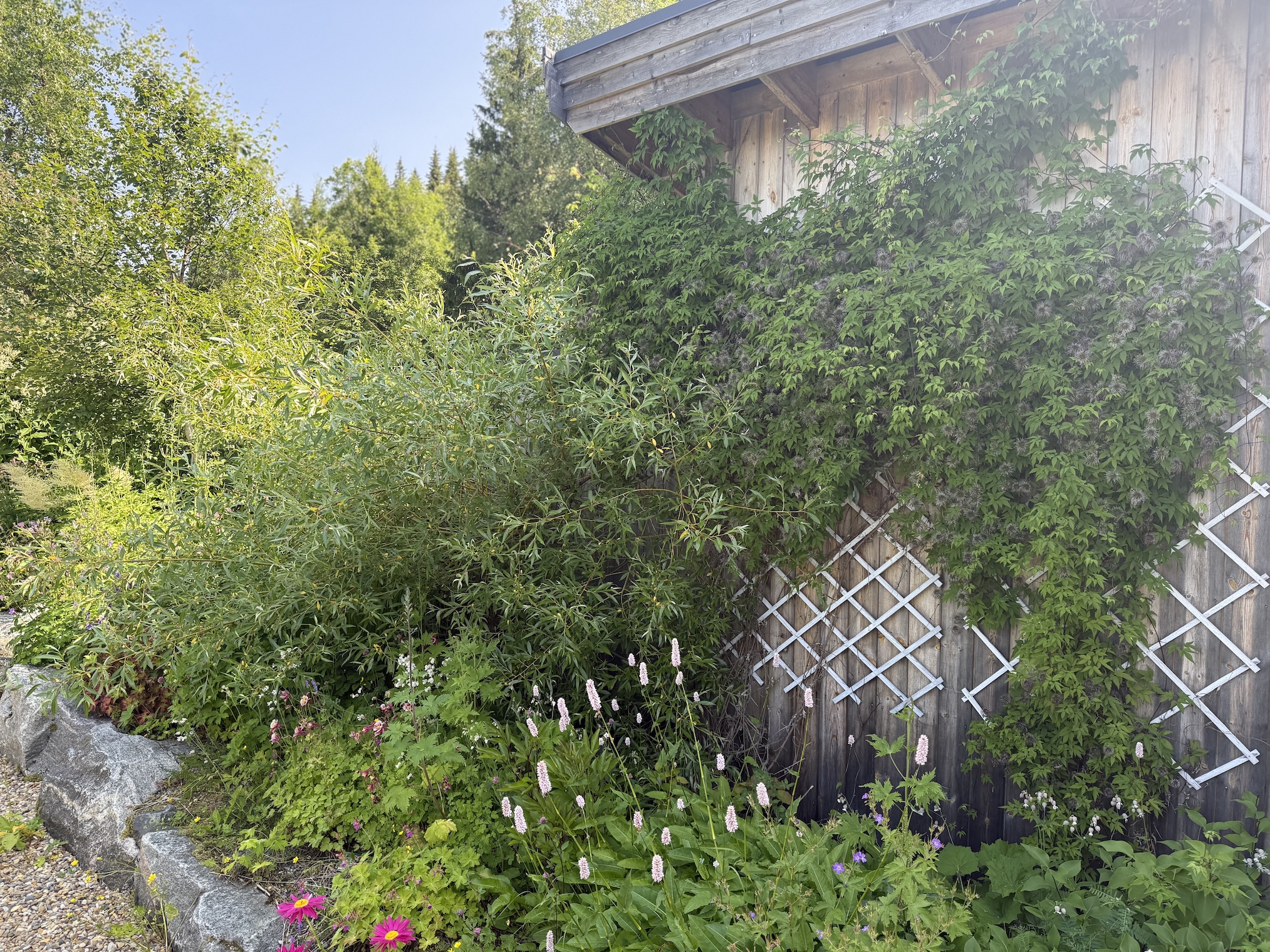
By the time the garage went up in 2019, the walled garden was already finished. The clematis has been climbing higher every year since.
There were the fans from Japan, for one — part of our own audience, more than anything, knitters and garden lovers who had flown in specifically to spend time with us and see the place for themselves. Word of the garden had apparently reached further than we realised, and one summer, while the front garden was still half finished, fifteen of them arrived. Knowing a little about Japanese garden aesthetics — the precision, the restraint, the sheer discipline of it — we panicked. For weeks beforehand we tidied and weeded and tried to force our very informal garden into something more presentable, and barricaded off the one section that was still, unmistakably, a building site. It made no difference. They got past the barricade without, as far as we could tell, even slowing down, and we found them deep in the one part of the garden we had least wanted anyone to see, photographing the fireweed. Wow, they kept saying, pointing at what was, by any definition we knew, a weed. We still do not fully understand why — but we took the hint, and the fireweed stayed. It is apparently a keeper. These days we no longer barricade the unfinished parts of the garden. We call them charming. It turned out to be the first of many lessons in the same subject: everything we tried so hard to control here, the garden eventually overruled — and was usually right to.
The rhododendrons taught us the same thing, in a different way. We planted them expecting, in time, tall and beautiful shrubs. What we had not accounted for was the snow — which lies here for months on end, a kind of blanket, warm in its own way for whatever it covers. Any evergreen that sticks out above it has no such luck; the cold here is too much for exposed growth to survive. So our rhododendrons never grow tall at all. Instead they spread low and wide, exactly to the height the snow allows, and cover the ground each summer in a carpet of colour more intense and abundant than any tall shrub could manage.
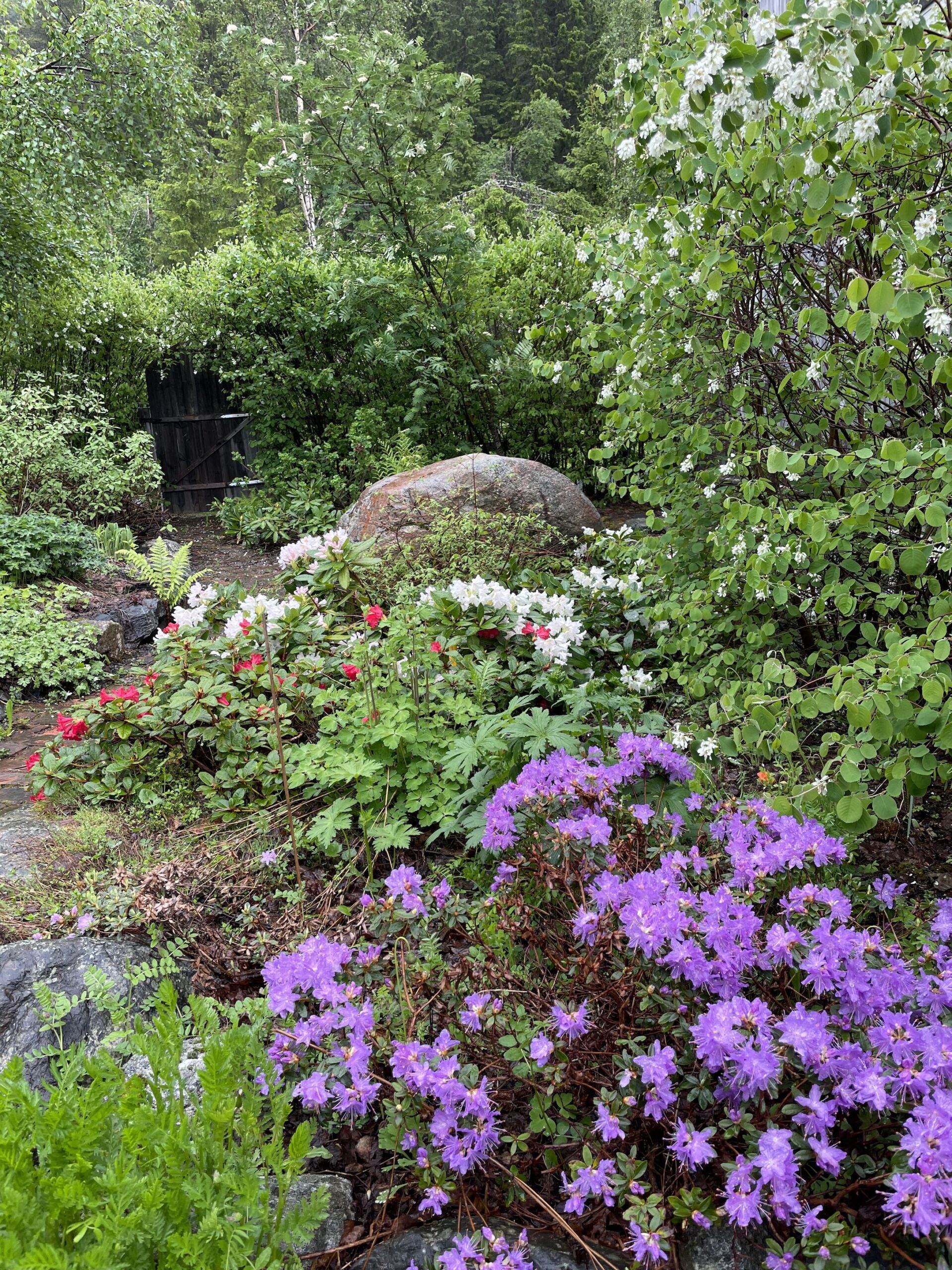
The carpet, in full colour, no taller than the snow ever allowed it to be
There was the greenhouse, which we had wanted for years, the wanting sharpened considerably by everything we had just seen in England. The real thing arrived for Arne’s fiftieth birthday: a proper greenhouse from Gabriel Ash. English, naturally, cedar-framed, twelve square metres, set on an insulated brick foundation, because this is Norway and the frost does not negotiate. We put it in completely the wrong place — out in the open, right at the edge of the lake, where it looks magnificent and catches the sun for most of the day, with the water reflecting the light and the heat straight back into the glass. Which is another way of saying it is an excellent place to fry a tomato. We solved that one, more or less, the way we solve most things here: by copying someone smarter than us. A nursery we visited had hung its greenhouse glass with burlap for shade, and we stole the idea within the hour. It helps. It does not fix the real problem, which is the site itself. It is still, all these years later, one of our favourite places on the whole property. I have suggested, more than once, that it would work far better moved into the shade of the rock garden. Arne is reluctant. I do not have the votes.
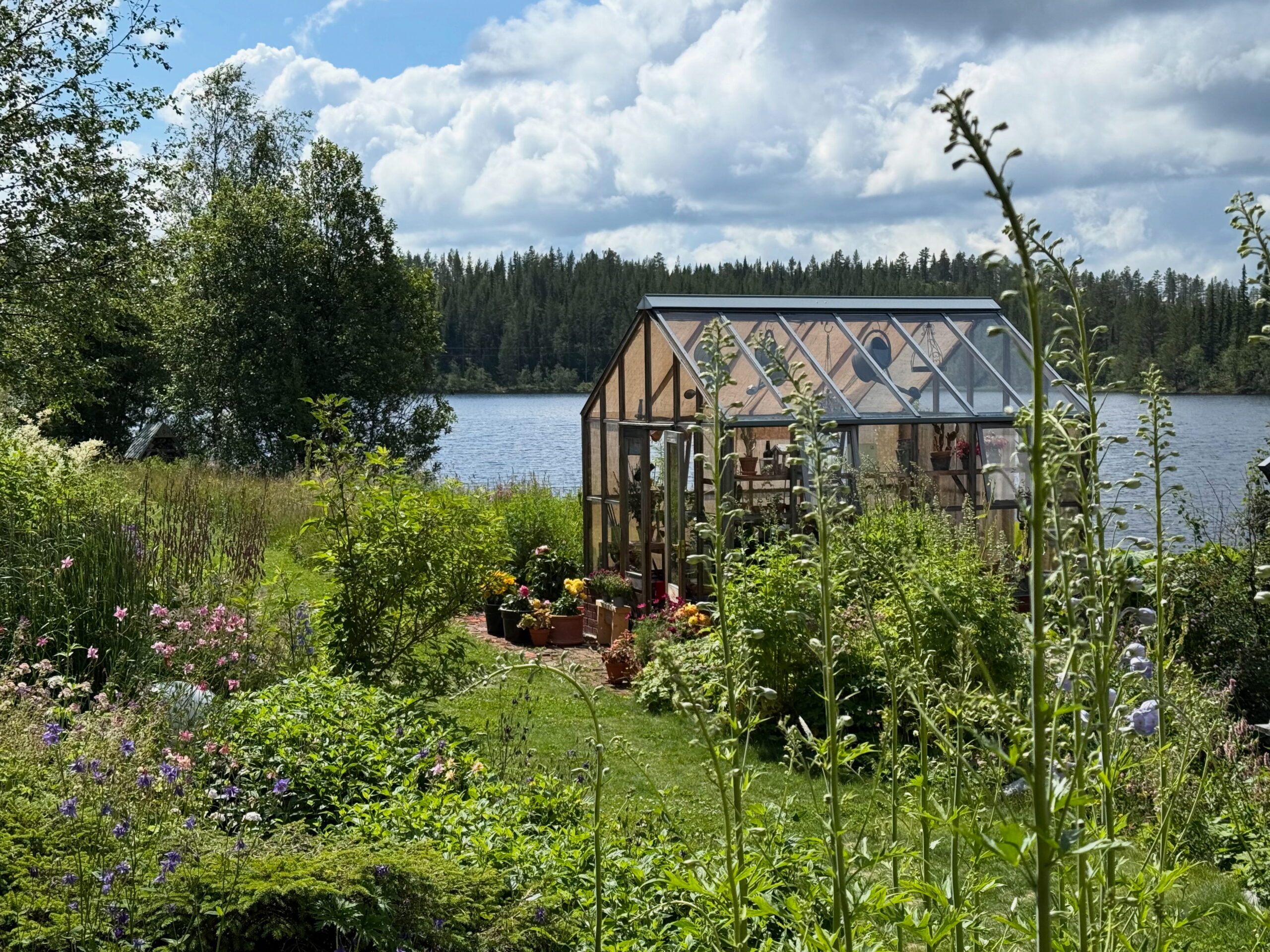
The greenhouse, burlap draped over the south and west sides where the sun does the most damage — the north side, mercifully, needs none.
The tomatoes, this week, are proving the point for us. We were away for a night, and by the time we left, Arne had all but given up on them — stalled, he said, going nowhere. We came home to find they had grown after all, right on schedule, just before a heatwave arrives that will very likely finish them off unless we get some shade over the glass, or move the pots out entirely. We are, as ever, discussing it.
There was the kitchen garden, more recently, a honeycomb of hexagons — Arne’s design, genuinely beautiful, the kind of thing visitors photograph before they have noticed a single vegetable. It is a kitchen garden in name. The potatoes come up reliably; this year the strawberries did well, most years they do not. Everything else is a negotiation. We cover the beds with fleece against the cold, and the insects move into the warmth underneath and eat whatever we were protecting. We will not use pesticides, so the compromise is marigolds planted in among the vegetables, to draw the insects off somewhere else — which raises a question we have never quite resolved. If we are already planting marigolds for their sake, and the marigolds are doing rather better than the vegetables they are meant to protect, at what point does a kitchen garden simply admit what it wants to be? We have not decided. Kitchen gardeners, in any case, we are not.
And there was Arne’s philosophy about weeding, which is this: the more you cram in, the less you have to weed. He is, annoyingly, right, and also the reason we now spend a good part of every summer moving things around instead — the plants, packed in that tightly, turned on each other, and we have been refereeing the survivors ever since. A garden, we have learned, is never finished. Ours is mostly just being endlessly rearranged.
A Job She Never Had
Lyda was our very first dog. She came to us in the second summer we spent at the station — a rescue, part Border Collie, part blue merle Collie, and part something we will never know. She had never been bred or raised to work, but something of the instinct was in her all the same, and it surfaced every time we picked up a tool. The moment we were busy, she was busy too — she simply had no real job to put it to, and never had.
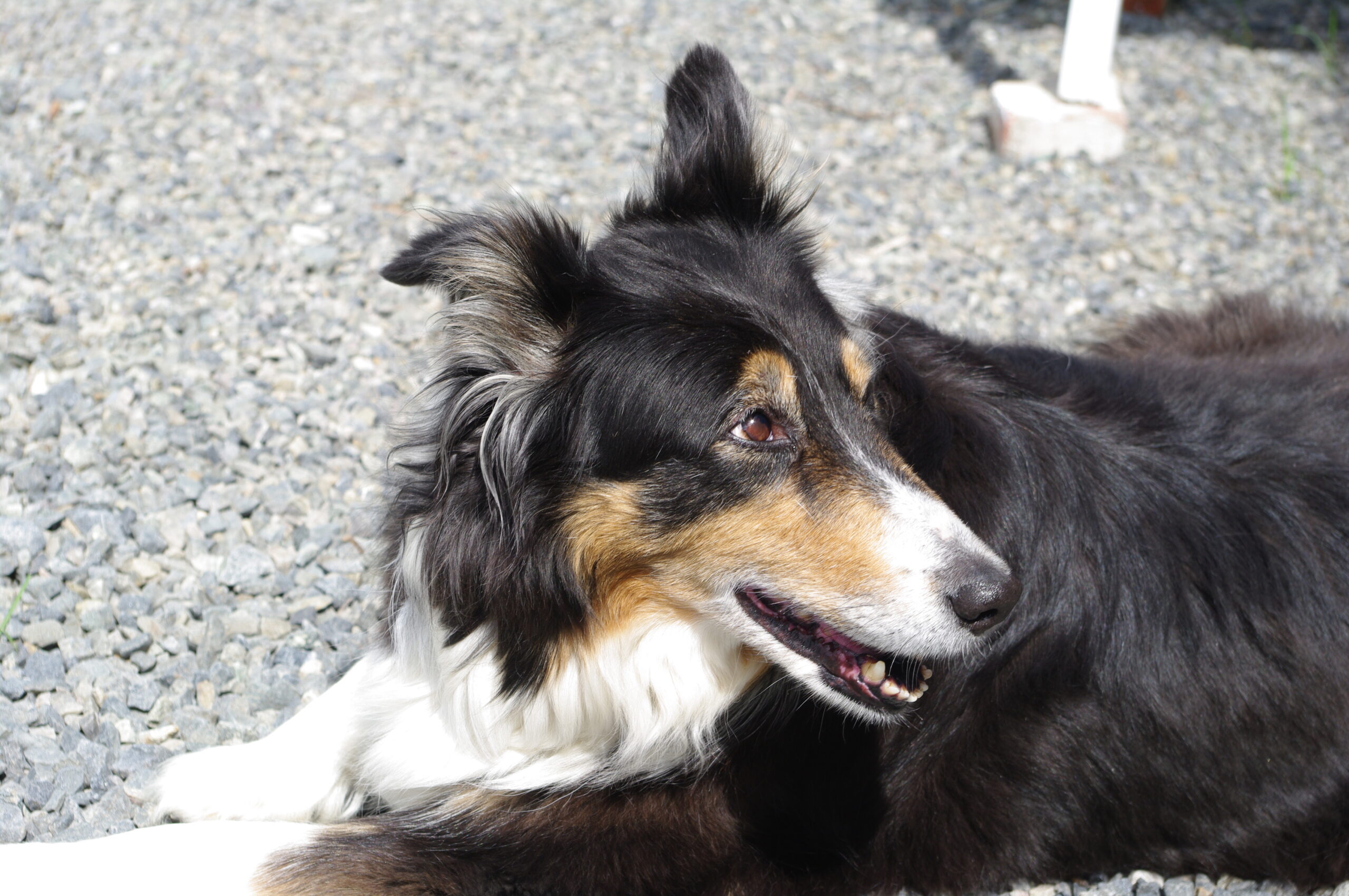
Lyda resting, which was never really her strong suit.
It was the trees that suffered for it. We had planted a young windbreak along one side, for privacy — we wanted a sanctuary, somewhere the outside world could not see in — and Lyda ran that line up and down, up and down, every time we worked, tearing up the saplings we needed to survive. She was not being destructive on purpose. She was answering an instinct with nowhere proper to go.
Eventually the trees needed the fence more than she needed the freedom. We closed off the rock garden and built a gate, and for a time kept her on the other side of it while we worked. I still remember her there — not barking, just standing at the gate, watching us with the saddest eyes, waiting to be let back into the job she loved and had never quite learned how to do properly. Of everything in this chapter, it is the one solution I still feel a little sorry for.
The trees grew. We have our sanctuary now, exactly as we wanted it — tall enough, in fact, that we are quietly discussing which of them might need thinning, which feels like a strange problem to have after spending years willing them to grow at all.
Lyda has been gone a long time now. Arne built her a small resting place not long after — brick, with a flower pot on top — facing the very fence she used to run. We still think of her every time we walk past it.
None of it happened the way we planned it, and all of it, somehow, became the garden. A wall built for straight lines that the plants immediately began to soften. A greenhouse sited for beauty that mostly grows cacti and burlap. A kitchen garden that cannot decide what it wants to be. A stand of trees we now have to thin, having once begged them to grow at all. There was no gardening culture here to teach us any of this. We worked it out ourselves, one problem at a time — which is, we have come to think, exactly what a garden is for two people trained in an entirely different field, handed a hillside, and left to work it out.
Which leaves the people who did teach us — the ones who fed us, inspired us, argued with us about manure, and slapped our hands away from the flowers. That is the next part of the story, and we will come to it soon.
From our little railway station in Norway, where the fireweed is thriving and about to bloom, the marigolds are outgrowing the radishes. And once again, it’s exactly the season we spent all winter waiting for.
ARNE & CARLOS
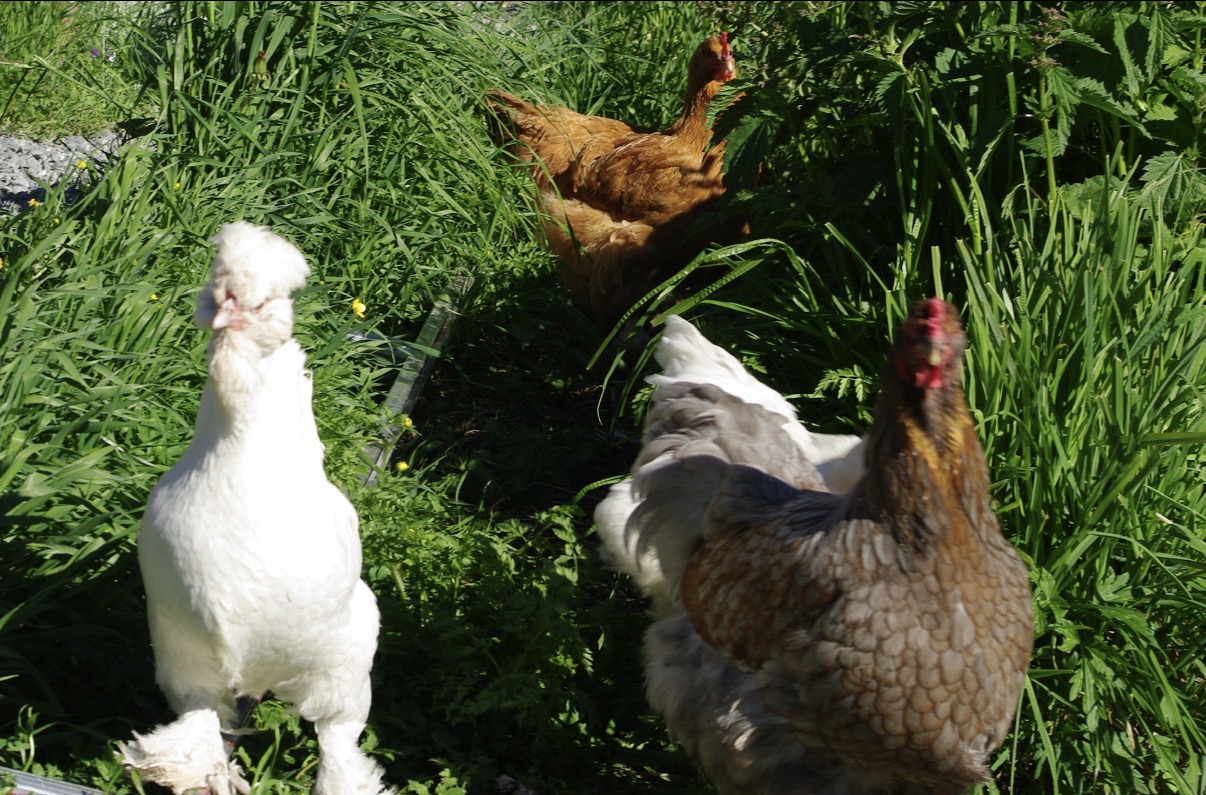
If you’ve ever wondered what a Sultan hen looks like: Exactly this. The other two are Katla and Eyja, our resident volcanoes.
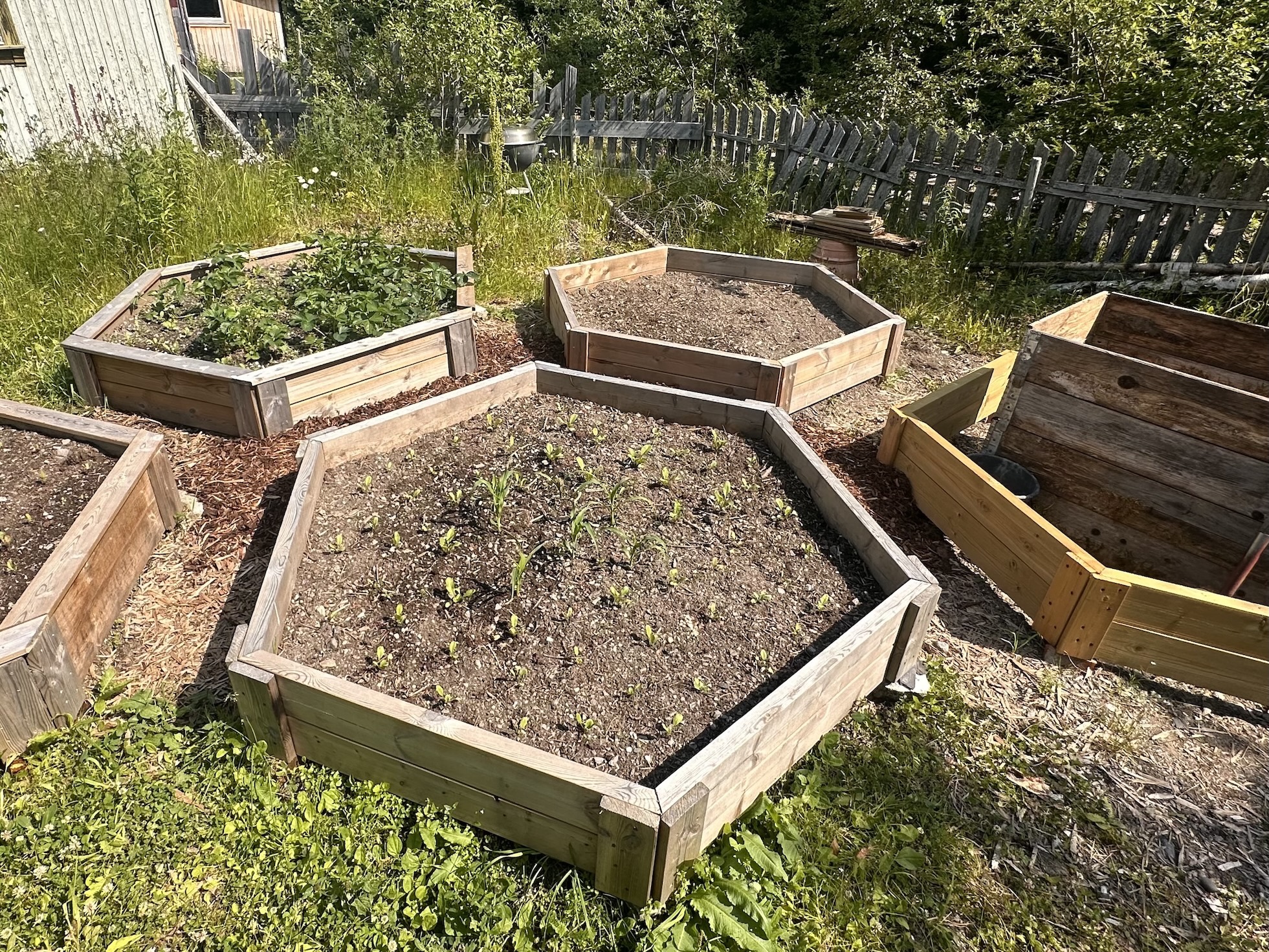
The hexagons, mid-season — some thriving, some undecided, one already quietly becoming something else
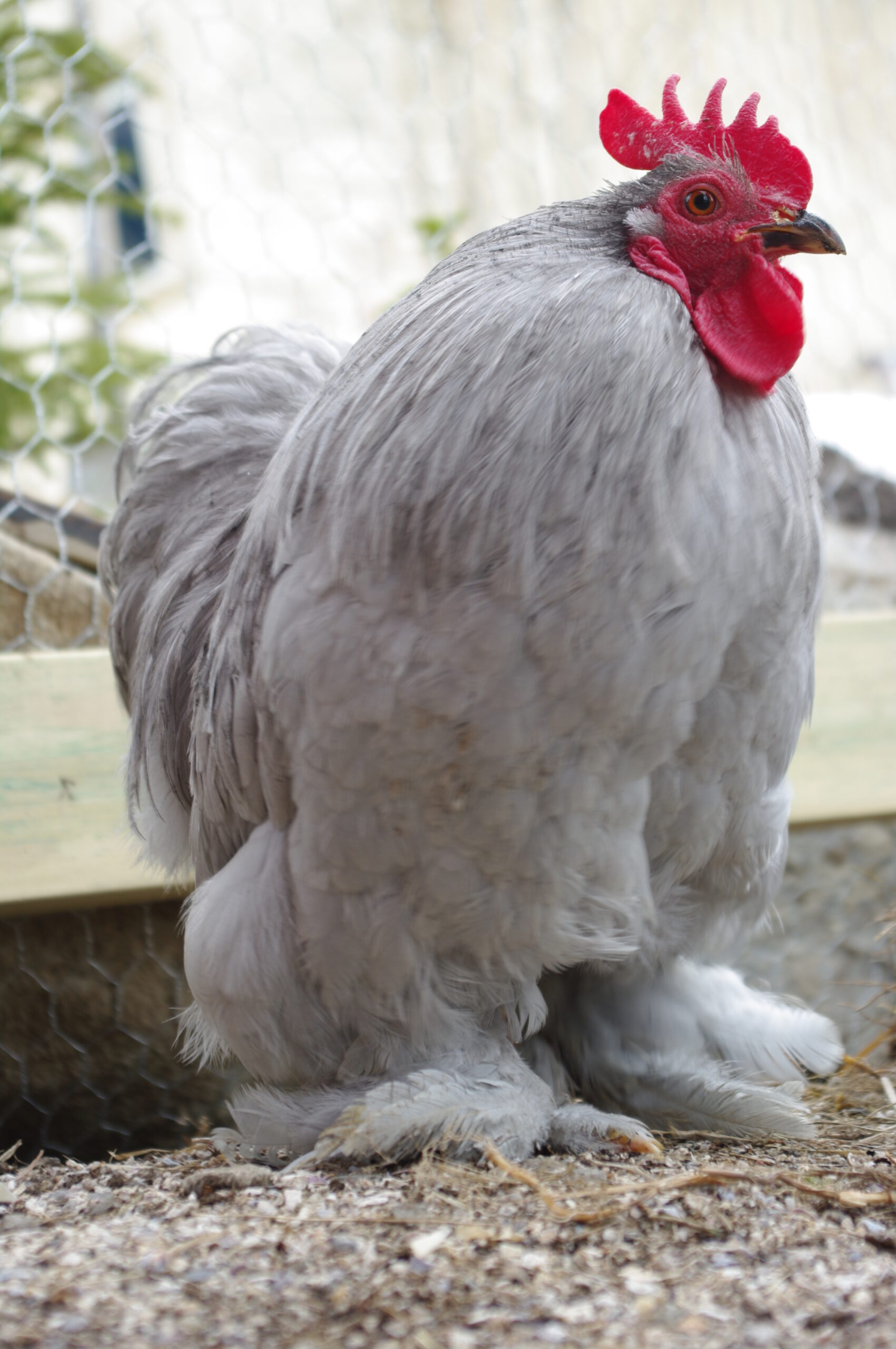
Ludvig, our Bantam Cochin, who ran the coop the way his namesake ran an expedition — with total, unearned confidence.
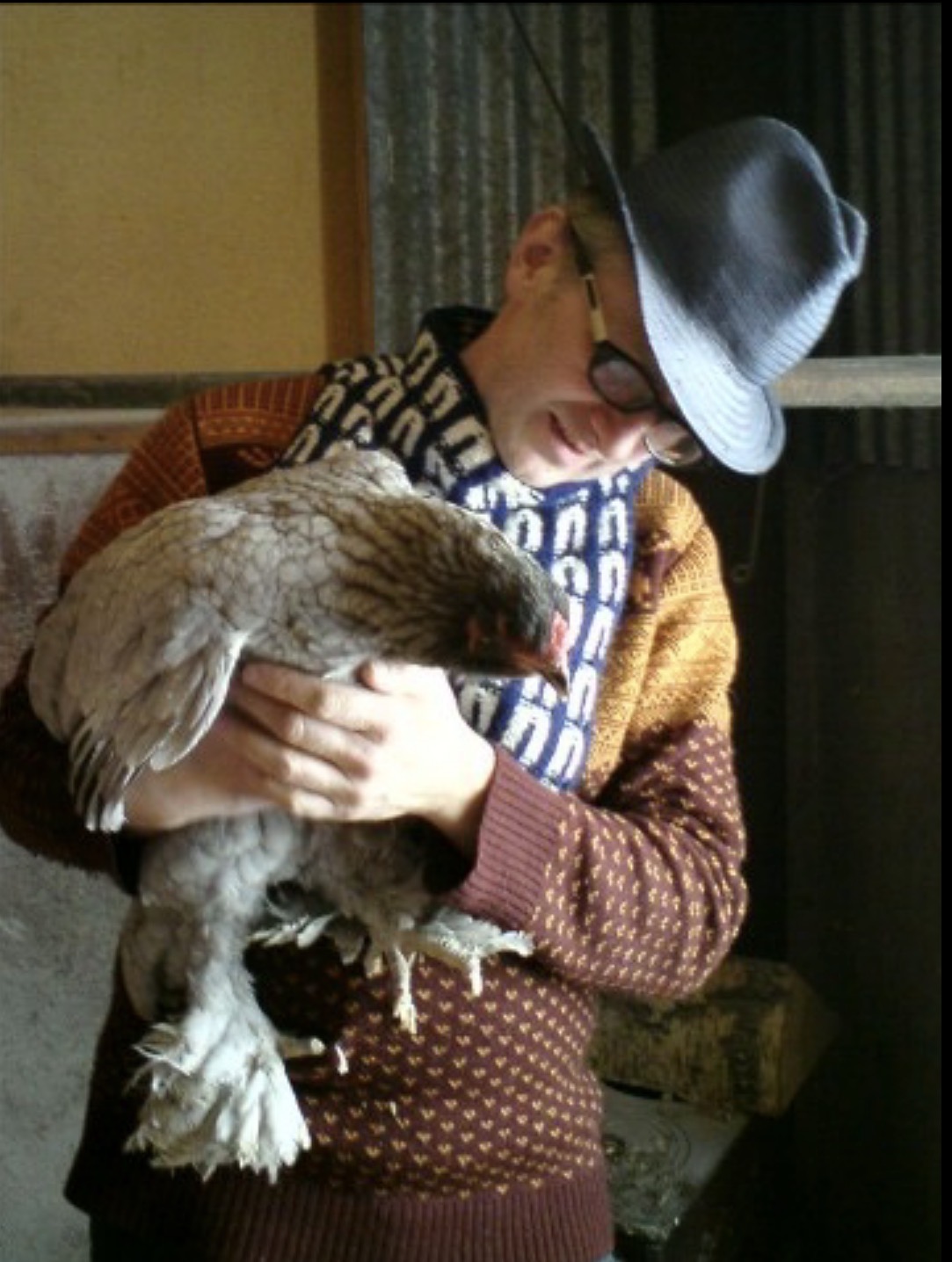
Every household has its awkward teenager. Ours was Ørnulf, a young Cochin rooster.
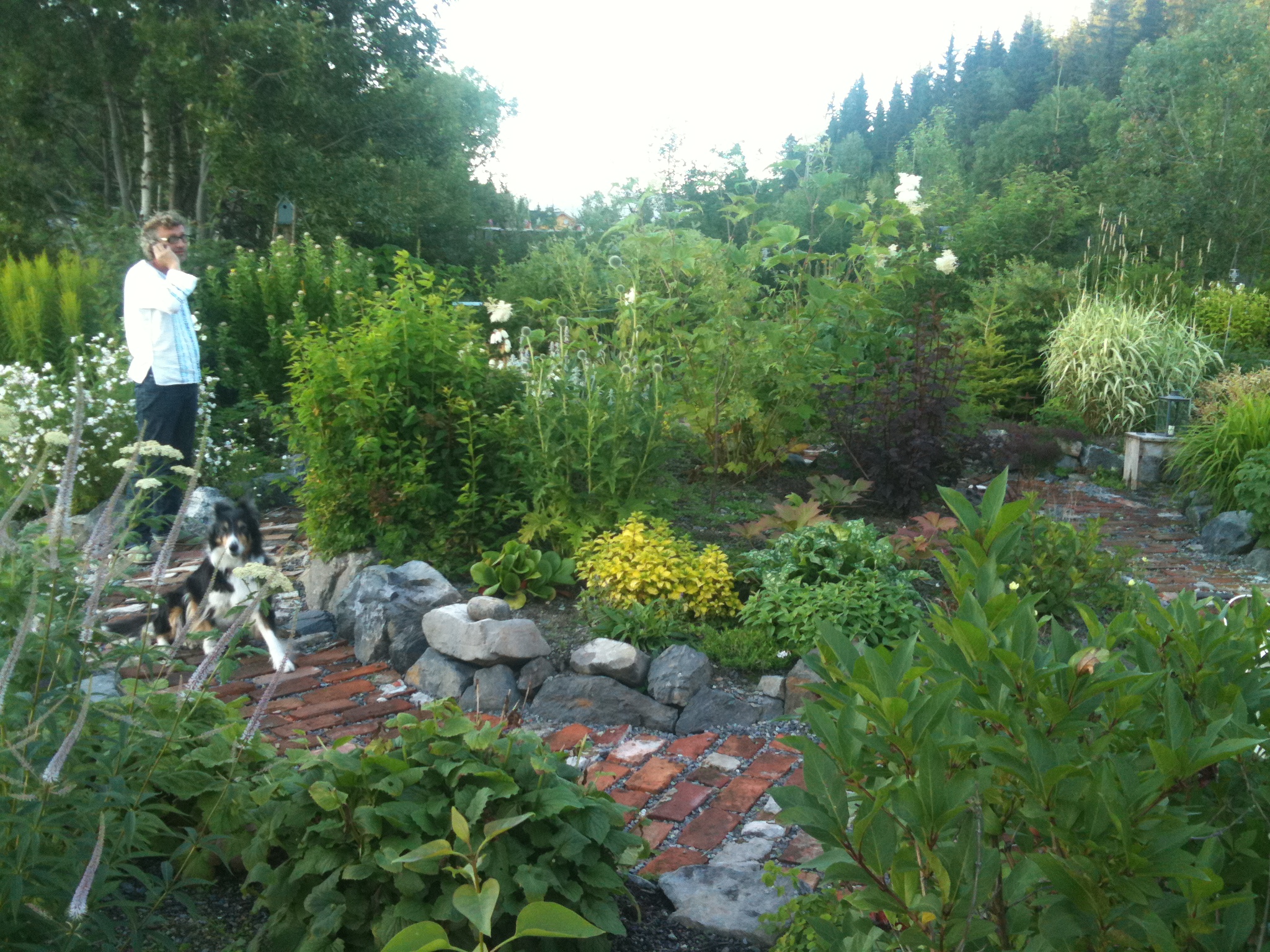
The rarest of photographs. Lyda at rest. Arne on the phone, momentarily not working, is the only reason it exists
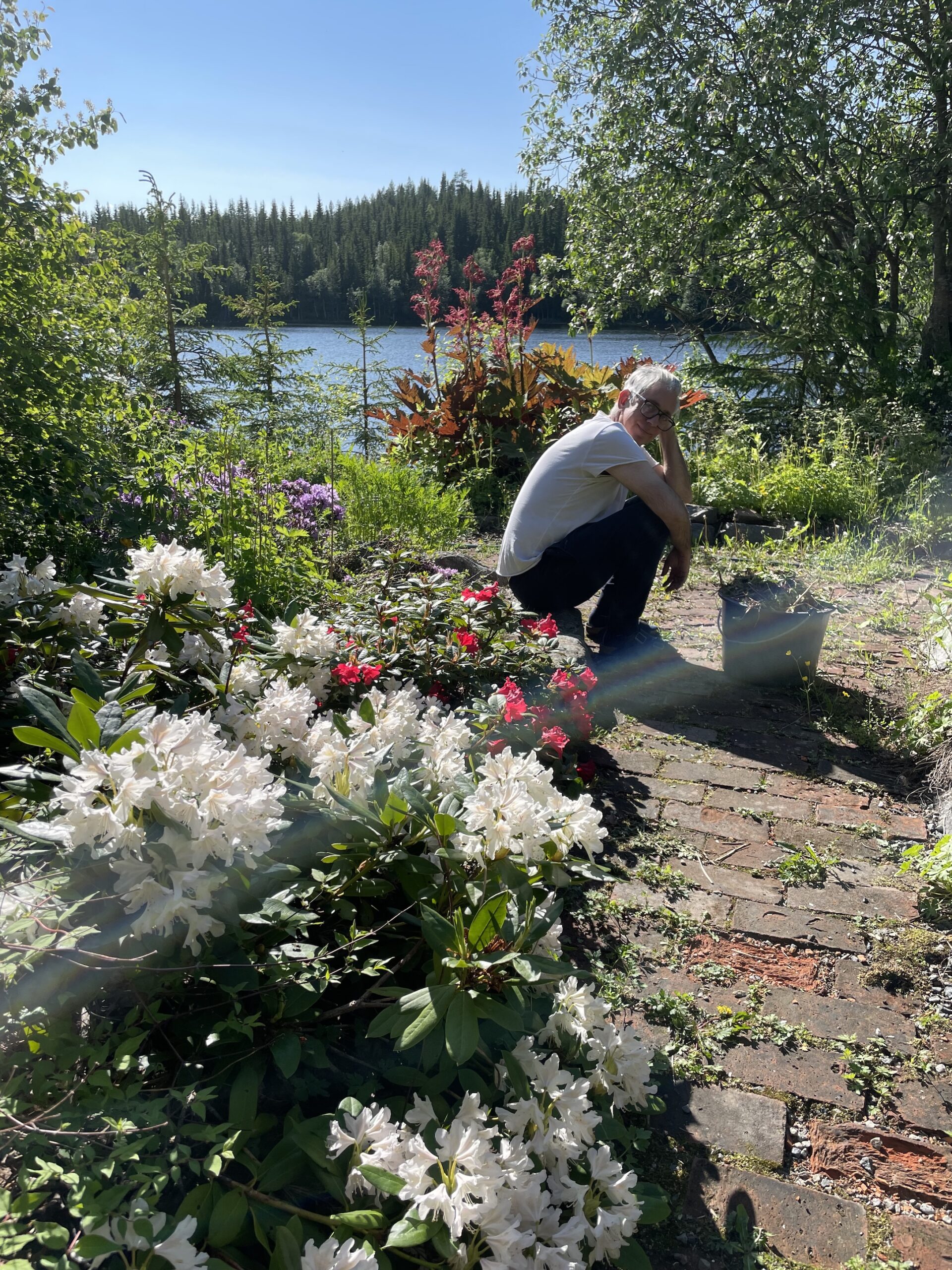
Not tending to much — the rhododendrons manage that themselves. Mostly just enjoying the view.
Skip to comment form
This series is bringing on such sweet memories of my Mom’s gardens in the many places she lived. Nasturiums and allysum in pots or tucked into little spots. And your mention of chickens! My baby half-brother, now in his 50s, living near Steamboat in Colorado. Berton Anders Larson has a sheltie named Joey, six cats (one named CatBert)), 30 chickens of various breeds (all with their own clever names) and three Indian Runner ducks. They all peacefully coexist and flourish, even in that mountainous region. Mom would approve; we had a pair of ducks when I was young—Inspector Fenwick & Nell (inspired by the Bullwinkle cartoons). The inspector often took over the nest while Nell went hunting for grubs. Oh, and our Nubian goat named Harriet who annoyed Mom by snacking on her flowers, but was a great companion for walking around our hillside in San Diego, California.
I had tried several times before and, unfortunately, encountered people who took advantage of me, leaving me disappointed and discouraged. When I learned about Priest Alaska, I decided to contact him and share my situation. For the first time, I felt truly heard and treated with understanding. I decided to take a chance after receiving guidance from Priest Alaska; at the time, I never imagined how much my life would change. I longed for a major financial breakthrough, so I chose to remain hopeful and follow the advice I received. When I finally discovered that I had won $80 million in the lottery, I was completely stunned and overwhelmed with emotion. It was a moment I will never forget. The news brought immense happiness to my family and me, opening the door to opportunities I had previously only dreamed of. I am deeply grateful for the encouragement and guidance I received during that time. After enduring so many prior disappointments, I am simply happy to find myself in a much better situation today. Thank you, Priest Alaska, for the support and guidance you provided throughout this journey. If you are interested in receiving spiritual guidance regarding your hopes and goals, you can contact Priest Alaska to request his services. email: alaskaspellcaster44 @ gmail. com
I came across Priest Alaska and decided to seek his guidance. I shared my story openly and explained how much I wanted my wife and our marriage back. He listened patiently and made me feel understood when I was at one of the lowest points in my life. With time. After Priest Alaska did his work. I started noticing changes in my situation. The distance between my wife and me began to fade, communication became more frequent, and the coldness that had existed between us gradually started to disappear. Then came the moment I had been hoping for my wife came back to me and was willing to give our marriage another chance. Having my wife back in my life means more to me than I can put into words. We are now taking things one step at a time, rebuilding our connection and creating a better future again. My experience reminded me that when a relationship is going through a difficult season, it is important not to lose hope. Seeking guidance and spiritual support can help you find a positive way forward. If you would like to contact Father Alaska, here is his information. Email: alaskaspellcaster44 @ gmail. com
I read about Priest Alaska online that he has helped a lot of people revive broken marriages and relationships. I decided to reach out and from the beginning I felt welcomed and a little bit calmness struck me again my nerves was so calm immediately I knew I was on with the right person who can help me turn my marriage around for the better. Following the guidance of Priest Alaska I noticed positive changes, communication between me and my husband gradually improved, misunderstanding was resolved. Today, I’ve reconnected with my husband and we are committed to moving forward together. For anyone going through a difficult period in their marriage or relationship, seeking trusted guidance and support can be an important step toward healing and reconciliation. I would like you to learn about Priest Alaska Services visit his Email directly to alaskaspellcaster44 @ gmail. com
🥰
Thank you for sharing this wonderful story. I feel like I know you and Arne as friends! Carlos, you write beautifully; I taught English and literature for forty years, so I know! 😃 I look forward to more stories, and after yesterday’s vlog, I look forward to reading Arnie’s writing, too. No teacher should EVER have treated him and his writing the way he experienced in school! Shame on that teacher!!!
Again, many thanks from southwest New Mexico!
Hugs,
Allie
I have so enjoyed the past two installments on establishing your beautiful garden. Even what hasn’t worked has been inspiring because I also have had difficulty finding what will “work” in my yard. Happy to know that I am not the only one.
Looking forward to the next blog post. Nice knowing that what your blog shows is actual pictures and not something AI generated.
Dear Arne and Carlos,
I very much enjoyed reading both pieces on your garden. They are beautifully written and really convey the peace of the space you have created and your love of it. It seems that gardening and knitting often go hand in hand. I too, do both. I moved to an hectare of land in Michigan, an hour and a half from Chicago, and just minutes from the beautiful lake. I’ve always lived in big cities, but when I retired I fulfilled my dream of living a country life. What initially looked like a football field is now filled with wildflowers (some I planted, others who appeared of their own accord), vegetable gardens, a few fruit trees and plenty of deer to munch on it all! It is such a joy to be out there tending to it every day, the only sound being birds or the wind in the trees. Thank you for sharing your story with us. I look forward to the next installment.
a very nice garden and I love the chickens
Hello Arne and Carlos, and greetings from Toronto where you came to give your wonderful presentation which I enjoyed immensely. I’m loving these gardening letters and as ever, love seeing all your photos. Your doggie was a beautiful lady and it’s lovely of you to honour her so lovingly
This is so metaphoric for me. I am looking forward to the next chapter. Thank you, Maureen
Thank you for sharing your garden! It’s often trial and error…not just with what the climate dictates but also wildlife! A delightful glimpse into years-in-the-making efforts ending with the culmination of a beautiful, peaceful garden!
Wonderful yet again ,loving your stories so much!
I think I may understand now why my sweet pea seeds would be difficult for your garden.
Love the low growing rhododendrons 💕
I am so enjoying each story about your garden. You two bring such joy to me and a chuckle here and a belly laugh there. Thank you for being you.
What incredible writing. I felt like I was in your garden with you. You have created a sanctuary and a paradise. Thank you for sharing this with us.
Wow! Your garden adventures are very inspiring! You too are amazing that you completely transformed rock into a beautiful garden! Kudos to your hard work and fortitude. Just reading the journey although very interesting, makes me exhausted LOL!
We just moved across America from Arizona to Wisconsin and we have a very established garden with all manner of beautiful plantings. What we’re finding out is how much work it is to keep everything looking beautiful. Coming from the desert with desert landscaping and very little care to Wisconsin, full of green and beautiful vegetation has been eye opening and we are in our 70’s so we are adjusting, slowly!
Thank you so much for sharing the story and the photos. It is a very magical garden to say the least. I look forward to the new installment!
What nice to read all this. As if we are visiting you for real 😃
Does your cacti survive the cold? Mine glasshouse became (without heating) a sort of warehouse. ☺️
Enjoy !
We live in the woods in Michigan, so contend with deer, bunnies, groundhogs, and many other small creatures that, even though they have an abundance of wild growth to eat, prefer my garden. You know what they don’t eat? My MARIGOLDS! So we adjust. We use a little stinky “Deer-Off,” pick slugs and snails off the hosta, fertilize and water as needed. And hope for the best. It’s heartening to see that all garderners face challenges. Your home and garden are delightful. Thank you for sharing with us.
What beautiful, happy, and fun photos you’ve added to thr lovely and wise writing. Life is what we make it, and we become what we learn from living. Thank you for sharing yourselves with us.
I am so blessed to be reading about your garden…thank you for sharing your special place. I close my eyes and your garden is alive in my mind. Again thank you!
Your garden is beautiful. I’m reading this after watching your podcast this morning where you took us from “room” to “room.” Now, I can see all the love and work you put into this patch of land…the land of Arne & Carlos. It is magnificent, and, while it isn’t the English garden you intended, it is all the more wonderful for the labor and experimentation that went into it. Thank you for sharing this part of your life.
https://marshainthemiddle.com/
I love the stories the shorts the pajama gardner the pod casts and sit and knit for a bit! I love it all! I watch them all day and night. I love you guys!
Lovely!
Thank you. 🙂💐
Ahhhh, thank you once again for taking me along! I love reading about your garden journey!!
I laughed when you spoke of your kitchen garden woes. I get hornworms on both tomato and potato plants. Basil does not repel them, nor did onions or garlic, so I tried marigolds – same results as yours – the marigolds are the happiest plant in the garden! However, they are pretty and despite the excess water required I have planted more flowers. Carrots add a nice fern, thyme makes a pretty accent, and the potatoes that survived the worms and grasshoppers, add great texture and color. But some food remains and somehow I enjoy it regardless. My best success this year is asparagus – and when finished for the year, it makes a lovely lacy accent. Here’s to gardening, here’s to food and flowers sharing space and here’s to coming indoors to cool off, wash our hands and sakfab.
Dear Arne & Carlos,
Thank you for the garden story. It has made my day.
Dear Arne and Carlos,
Your garden story has so many parallels to life’s journey itself. I’m keeping it to use in an informal talk I’ll give someday,maybe to my grandchildren.
It gives me the imagination and inspiration to continue my own small version of a garden. Thank you so much.
By the way, in the Pacific Northwest of the U.S. where I lived most of my life, fireweed has a special place in the landscape. It is one of the very first flowers to emerge from soil scorched by wildfires. We don’t consider it a weed regardless of the name. In Alaska, somehow they make “honey” from it – not by bees! So for me it is a lovely and brilliant image of sweetness and life after disaster. I’d love to see your garden and see you knitting with my own eyes.
Meghan
Arne and Carlos,
Thank you for sharing, it’s beautiful.
Arne & Carlos. Thank you for this lovely musing. You have again given us a little peek into your history. I never knew you had chickens. I love how you talk about the progress of the garden. It truly is lovely. A combination of the two of you. Your photos are beautiful. You should do a book based on it. How satisfying it must be to sit back at the end of the day and enjoy the fruits of your labors.
Everything is beautiful. I have really enjoyed reading both stories of how all of this came about. Thanks.
Gentle-men and the spirit of Lyda,
Thank you!
Your stories are inspirational and transcendent. The photos of today’s post reveal how hard and with what love you live your life. My 90-yr old mother has been building her perennial garden for I don’t know how many decades and it is a riot of color following our North Country seasons. It is interesting. Her garden feels happy and busy and noisy. Yours feels peaceful and calm and like a warm hug and a joyous bark.
Thank you truly for sharing. Think I’ll make some oatmeal cookies and have tea!
I was transported and spellbound your journal. And the photo: exquisite.
Please, please publish this epistolary account of your gardening odyssey. Trust me, it will be a hit.
Looking forward to the next instalment .
Best wishes from Cheryl in Canada
this is so lovely! thank you. what an exercise in patience and perseverance. I admire you for it. the garden is a dream.
Dear Arne and Carlos, Receiving my first email chapter today, I was transported to what I think of as Heaven. I have lingered over your books for years, and now I am delighted to be invited into this beauty. I look forward to the future “visits”. Love you both, Kathleen in Michigan, USA.
I enjoyed the next Parton your growing garden it is a lot of work imagine where you started and where it is today the white flower are beautiful looking forward to your next part take care
What could I possibly add to what admirers have already said? Your writing and experiences show the humility that Mother Nature constantly imposes on us. She is always in charge!
Wonderful way to create such a beautiful garden that is uniquely Arne and Carlos 💕It is spectacular! Please share photos when the delphinium and peonies bloom!
Lovely, just lovely! Such beautiful imagery when reading your post 🥰
A wonderful segment on perseverance, comical pets and partner negotiations. Well done. Beautiful gardens.Bev from Canada
This was wonderful. Carlos, you are an exceptional writer. I love reading your stories and pretending I am there. Nowadays my gardening is restricted to our apartment’s balcony which is a small challenge as we get very hot sun for half the day, too many cold days, and too much strong wind. However gardening gets in the blood and keeps you dreaming of what it could be.
Cheers to both of you.
Awesome! Absolutely awesome. I look forward to reading the next part.
Eva in Canada. ❤️
You have a beautiful garden. It shows what perserverance can actieve.
I once heard that the best thing about a garden is “next year”. Do you agree? Keep writing, you are very good at it and very appreciated!
Dear Arne and Carlos,
It is an unusually cool summer morning here in the Pacific West Coast. I am enjoying my coffee in my garden over a small propane fire pit while reading about your garden. I have a smile on my face. My garden, after 32 years, is still working out what it wants to be. But still it is full of birdsong, crow calls and eagle cries.
What a lovely way to start my day. Thank you.
Colleen
I am not and never will be a gardener but I am enjoying this series. So beautifully written and with the wry, dry humor that you have. It is lovely!
Dear Arne and Carlos,
How refreshing and interesting to read about your garden. Although it must have involved a lot of hard work, it sounds and looks like a lovely peaceful hideaway … something we all need in this mad world. Thank you for sharing.
Jeannette
Dear Arne and Carlos, I really enjoyed reading about your garden. I totally understand how gardens sometimes make their own decisions despite our plans and I have always appreciated them, eventually. Thank you for sharing your garden journey. Wendy, East Anglia, UK. Xx
Dear Carlos and Arne,
it was a joy to read your letter, and I could tell you hundreds of similar stories of our garden! So many wishes were not coming true, but a lot things became wonderful by doing more or less nothing! One year the whole harvest of blackbeeries cooked away in the hot sun. Another year all potatoes where eaten by the snails. This year we had the surprise of a wonderful harvest of wood-strawberries we didn‘t notice before. A garden is always wonderful!
Many greetings from North-germany
I laughed out loud a few times, Carlos. That cold, eh? And the absurd heat if water reflects it. And the wanting of things that will never grow where you live. I garden in a riverbed, a low delta which has its own challenges. Summers are dry and hot; 40 degrees Celsius is not an exception. Winters are wet and can be minus 20 Celsius. Covering all in snow or hail with deep-frozen feet. Shredded Hosta are no exception. I remember Sissinghurst; my trees have rambler roses covering them, as seen there. The white theme never happened. Tulips turned out purple and yellow instead of white. The Tropaelum was orange instead of white. I embraced it and learned to love orange. Thank you so much for your lovely writing. I so enjoy it.
Dear you both,
Reading this chapter I felt I was there.
I will never get there in this lifetime, but I feel like I know the place.
Thanks
Xxxx
Ida from Amsterdam
Dear Arnes and Carlos.
Many years ago I discovered your books and channel. Later I attended an evening in Healesville, Victoria (Australia) where you entertained a roomful of people with your stories and experiences. It’s cold here now and the wood stove is keeping us cosy. So sitting here and reading the story of your garden is just beautiful. I felt like I was strolling through your garden with you. Thank you so much for sharing.
That was a lovely read. Thank you.
Dear Arne and Carlos… Lyda is SO beautiful… xxxx and the gardens of course ..lovely.
thank you for sharing your lives with ‘us’ .. xx Judy in Australia..