

The Quiet Thread
Issue No.11 – There is No Shame in Turning Back
Stories from our home at 682.5 metres above sea level
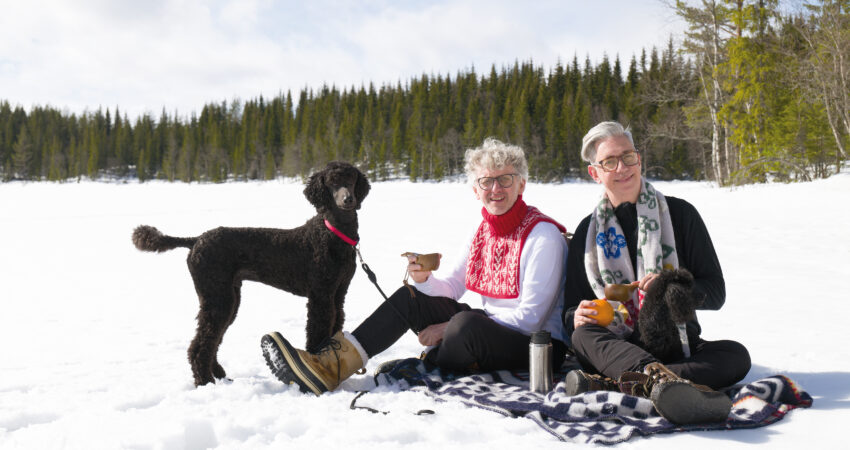
I was not born here. I was born in South America, grew up between cultures, and arrived in Norway as an adult. I have now lived here longer than anywhere else. A few years ago, I became a Norwegian citizen. And yet every Easter, without fail, I find myself watching this country with the same slightly bewildered affection I had the very first time.
When I share these observations with Arne, who was born here and has never known anything different, he laughs. And then he says: I never thought of it that way.
Which is, I think, exactly the point.
The Great Norwegian Contradiction
Norwegians spend all winter complaining about the cold. And the snow. And then the cold again. And just when the temperatures begin to rise and the snow starts to melt in the valleys — they pack their bags and head straight for the mountains. For more snow. More cold. More of everything they have been complaining about since October.
Arne finds nothing unusual about this.
Easter in Norway works a little like Thanksgiving in America — it does not matter much whether you are religious or not. Everyone takes part. The whole country stops, packs up, and goes somewhere. Schools close. Offices empty. And if you try to buy a litre of milk on the wrong day, you may be out of luck. It is, in the very best sense, a national institution.
The Cabin
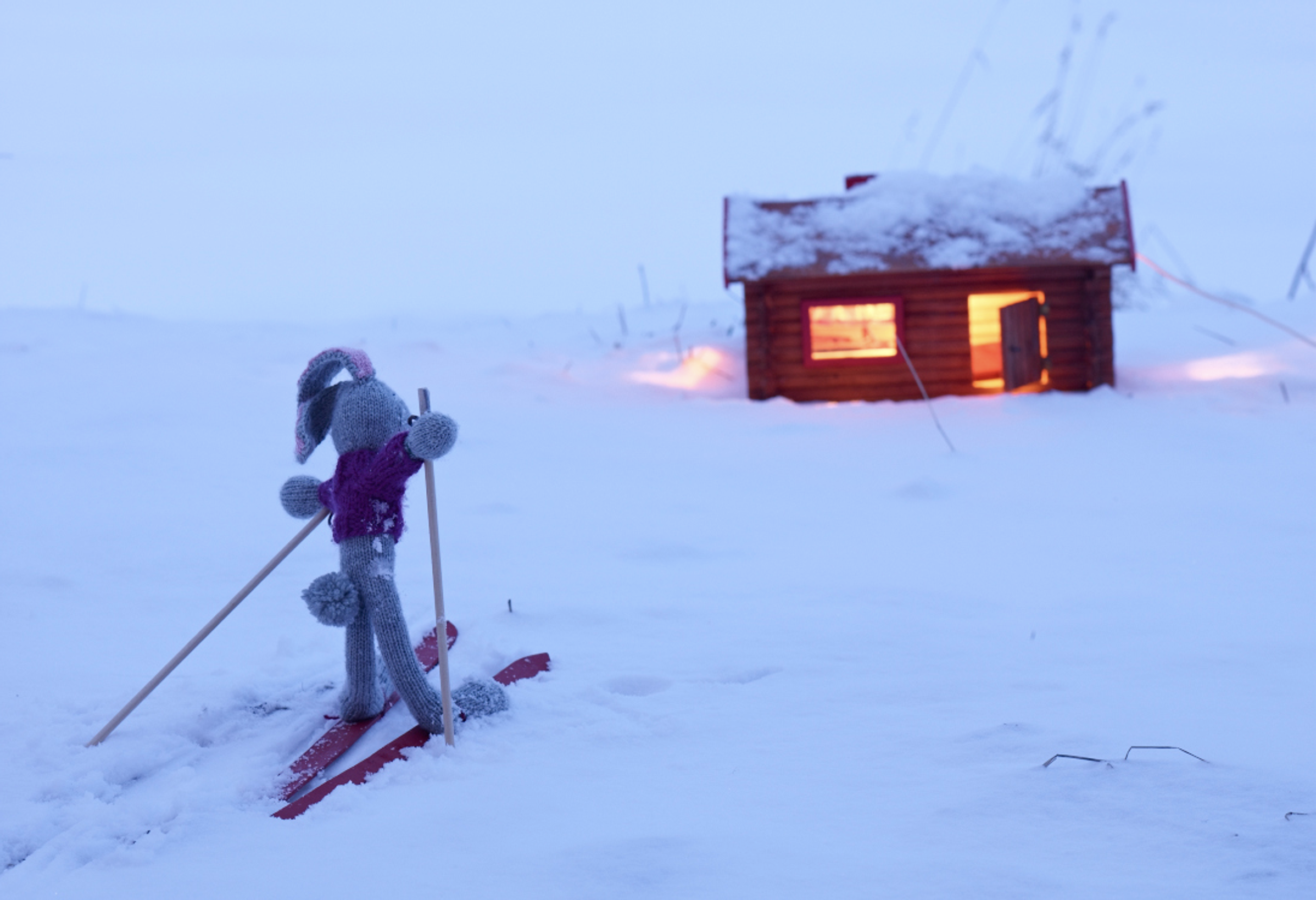
The destination, almost always, is a cabin. And here it is worth knowing that there are two kinds.
The first kind has been in the family since just after the war. It has no indoor plumbing. The kitchen looks exactly as it did in 1952, and touching anything would be considered an act of some seriousness. The rituals are the same as they have always been — the same walks, the same meals, the same view from the same window. This is not nostalgia. This is the entire point.
The second kind has a heated driveway, a remote-controlled fireplace, and a refrigerator that someone else has already filled with food. It is, in every measurable way, more comfortable than the first kind.
The owners of the first kind of cabin have opinions about this. They do not always say them out loud. They do not need to.
What to Wear
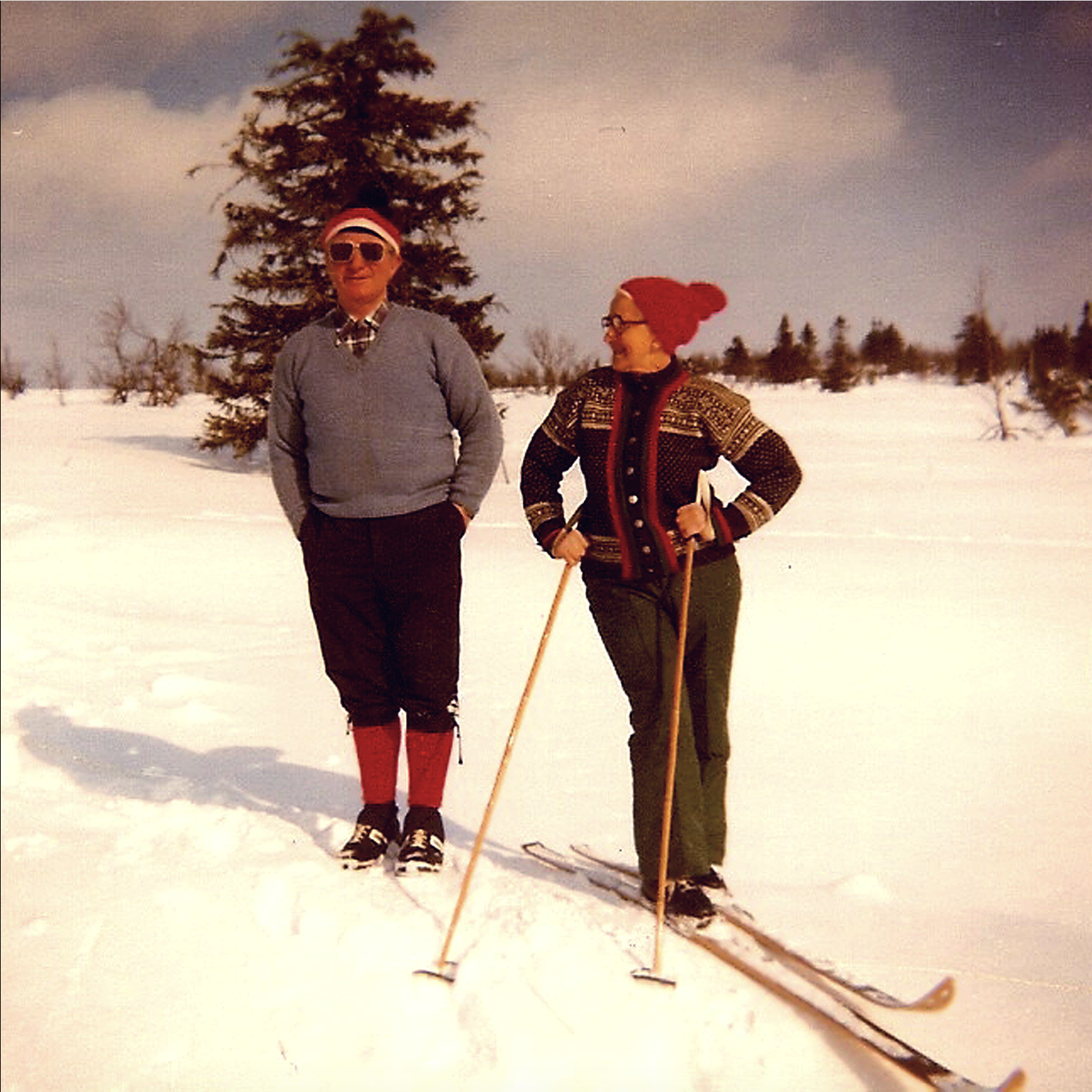
Arne’s grandmother talking to a cabin owner an Easter in the 1980s.
If you are heading to a Norwegian mountain cabin for Easter, there is a particular way to dress. A Norwegian patterned sweater — ideally one that has lived in the cabin since your great-grandfather wore it and smells faintly of woodsmoke and several decades of good use. Knickerbockers to the knee. Coloured knitted stockings, never white. And lace-up cross-country ski boots of the old-fashioned variety.
It is a beautiful way to dress. It is also, I have noticed, more commonly seen on people who do not actually live here year-round. Those of us who do tend to observe from a respectful distance.
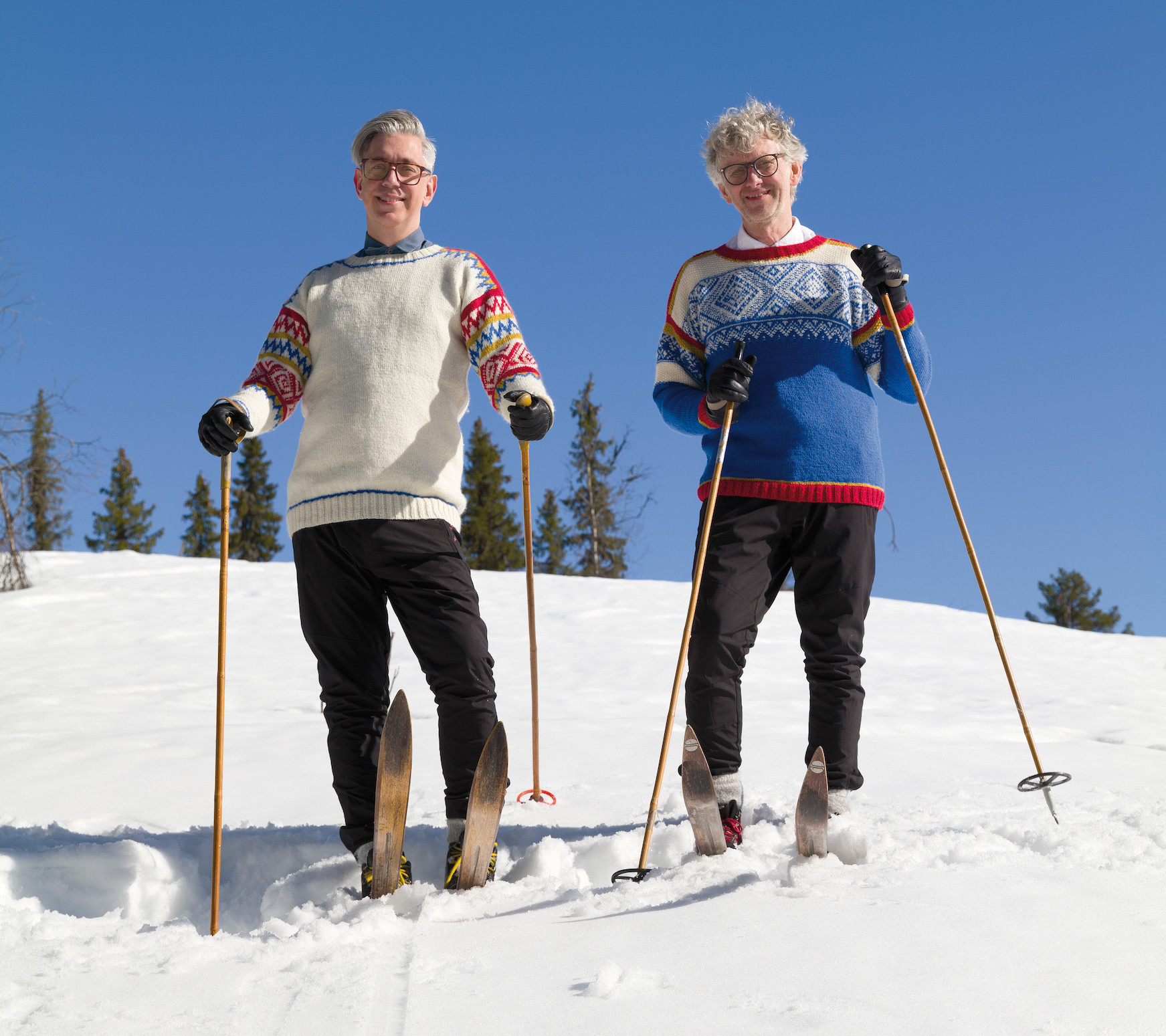
I will say this, however. Those old cabin sweaters are not simply something you put on at Easter. They are a national treasure. Over the years, whenever we have visited friends in their cabins around the country, we have found the most extraordinary pieces — sweaters of real age and astonishing beauty, with patterns we had never seen anywhere else, folded quietly in drawers or hanging on hooks as though they were perfectly ordinary objects. We always asked permission to photograph them. They have been more useful to our work than we can properly explain.
Arne grew up surrounded by sweaters like these. He never thought to find them remarkable.
I still do.
A Few Things I Have Noticed About Easter in Norway
Every Easter, Norwegian publishers release a carefully curated list of new crime novels specifically for the holiday. Every bookshop window fills with them. NRK, the national broadcaster, publishes its annual guide to the top ten Easter crime series with the same gravity it normally reserves for matters of national importance. This tradition is called påskekrim. It goes back to the 1920s, when a publisher had the inspired idea of marketing a new crime novel on the front page of a newspaper as though it were breaking news. Readers were gripped. The idea caught. It never let go. We spent many years in the book industry. Every autumn, while we were busy with our Christmas books, our colleagues in the crime department were already thinking about Easter.
Today, even milk cartons carry a murder mystery at Easter. This is not a metaphor. This is something that actually happens. I mentioned this to a friend from abroad recently. She did not believe me.
Many of the older outhouses — the ones reached by a short walk through the snow — have not one hole but three. I noticed this early on and asked Arne for an explanation. He had never considered it before. We have discussed it at some length since. Our best theory: no one should have to sit alone in a dark outhouse in the mountains reading about murders.
Oranges are deeply and inexplicably associated with Norwegian Easter. They appear everywhere — in cabins, in ski bags, in children’s pockets. The most likely explanation is that oranges were once a luxury, something that arrived in the shops in late winter like a quiet promise of better things ahead. Whatever the origin, the tradition is firmly established. You bring oranges to Easter the way you bring cranberry sauce to Thanksgiving. It is simply not discussed.
Kvikk lunsj is Norway’s most beloved Easter chocolate. Imagine a Kit Kat. Now imagine it is not quite a Kit Kat, that it comes in a red, yellow and green wrapper printed with the fjellvettregler — the nine rules of mountain safety that every Norwegian knows by heart. Rule number nine is our favourite: det er ingen skam å snu — it is no shame to turn back. The fact that this requires an official rule, printed on a chocolate wrapper and memorised from childhood, tells you everything you need to know about Norwegians and their relationship with the mountains. Kvikk lunsj is considered the correct thing to eat at a rest stop on a cross-country ski trail, preferably with a thermos of hot chocolate and a reasonable sense of personal achievement. At Easter, there is a reliable national shortage. Every year. This is accepted as one of the minor hardships of the season, alongside the traffic and the weather.
Roast lamb is eaten on Easter Sunday. It connects the celebration to something older and more symbolic than most people stop to think about. Norway does lamb very well. This is not the place to argue about it.
Norwegians say they are born with skis on their feet. At Easter, you believe them. The Birkebeiner — one of the most famous cross-country ski races in the world, 54 kilometres through the mountains of central Norway — takes place in the weeks around Easter. But the Birkebeiner is only the most well known of many. During påskeferie, races happen everywhere: organised events, local competitions, and entirely spontaneous family races that are taken completely seriously by all involved. I have learned not to be surprised by any of this.
Out on the trails, you will find bonfires. Around them, children in ski boots eating grilled hot dogs, a thermos of hot chocolate being passed between adults who have just skied further than they probably should have. It is not a complicated scene. It is a very good one.
682.5 Metres Above Sea Level
We live at 682.5 metres, on a former train station next to a lake that freezes solid every winter. By rights, we should have snow for Easter. And we used to. But winters here are changing, and some years now the snow is thin even at our altitude. On those years, everyone drives a little higher. The one remaining slope fills with six million Norwegians who all had the same idea and are all pretending this is a relaxing holiday.
My first Easter here, the sun was shining and the lake was frozen. And there, on the ice, were people. Not just fishing — though there was plenty of that — but lying on sun loungers, under umbrellas, as though they were on a beach somewhere warm. In full winter clothing. On a frozen lake. In the sunshine.
It was one of the strangest and most wonderful things I had ever seen.
I have lived here many years now. I mentioned it to Arne recently — the sun loungers, the umbrellas, the ice. He laughed. I never thought of it that way, he said.
Some things you only notice when you arrive from somewhere else.
When the sun shines in Norway, you go outside. The temperature is beside the point.
-Carlos
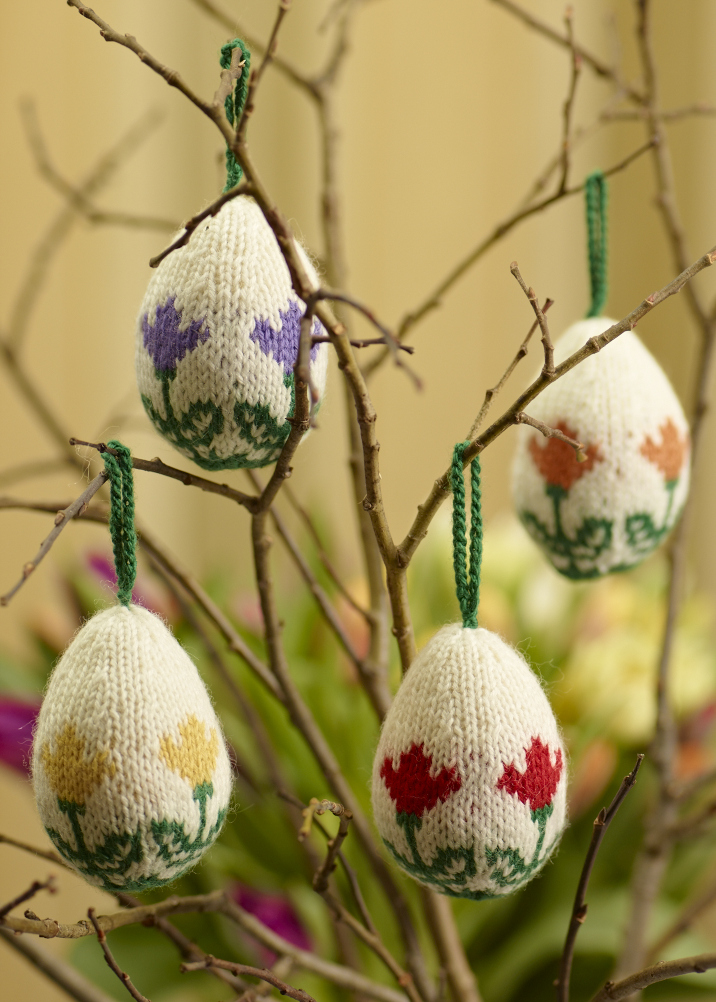
At Easter, we also bring out our knitted eggs. This year, we are putting our full collection on sale — all the eggs from our book Easter Knits, in every colour we love. You will find them in our shop. We wish you good snow, a good crime novel, and a very happy Easter wherever you are celebrating.
Fjellvettreglene — The Norwegian Mountain Code
Nine rules every Norwegian knows by heart. Printed, since 1952, on the wrapper of a chocolate bar.
- Plan your trip and inform others about the route you have selected.
- Adapt the planned routes according to ability and conditions.
- Pay attention to the weather and the avalanche warnings.
- Be prepared for bad weather and frost, even on short trips.
- Bring the necessary equipment so you can help yourself and others.
- Choose safe routes. Recognise avalanche terrain and unsafe ice.
- Use a map and a compass. Always know where you are.
- Do not go alone.
- Det er ingen skam å snu. There is no shame in turning back.
Leave a Reply